Best Time to Elope in the Pacific Northwest (2026 Guide)
Seasons in the Pacific Northwest: When & Where to Elope
Updated for 2026 with current seasonal guidance, access considerations, and up-to-date planning resources.
Eloping in the Pacific Northwest isn’t about finding the perfect season — it’s about choosing the season that fits the experience you want most.
This region has dramatic shifts throughout the year: snow-dusted peaks well into summer, misty rainforests that glow in spring and fall, dry alpine landscapes that only open for a few short months, and long winter days that favor cozy, intimate celebrations. Weather, crowds, road access, and even wildfire or snowpack conditions can all shape what’s possible on your elopement day.
This guide breaks down each elopement season in the PNW — what the weather is actually like, what tends to be accessible, where crowds show up, and which locations shine at different times of year — so you can plan with clarity, flexibility, and realistic expectations.
A quick overview
There’s no single “best” time to elope in the Pacific Northwest — only the best time for you.
Love greenery, waterfalls, and quieter trails? → Spring
Want high alpine views and lots of daylight? → Summer
Crave moody weather, fall color, and fewer crowds? → Fall
Dream of snow, rainforests, or cozy cabin vibes? Want the least crowds? → Winter
Below, we break down each season with real-world considerations like road access, crowds, weather patterns, and backup planning.
Something to note: In recent years, seasonal patterns in the Pacific Northwest have become less predictable. We plan every elopement with multiple backup options to account for weather, smoke, road closures, or park access changes.
Jump to: Spring | Summer | Fall | Winter
Spring Elopement Season (Late March to Early July)
What spring elopements in the PNW are really like
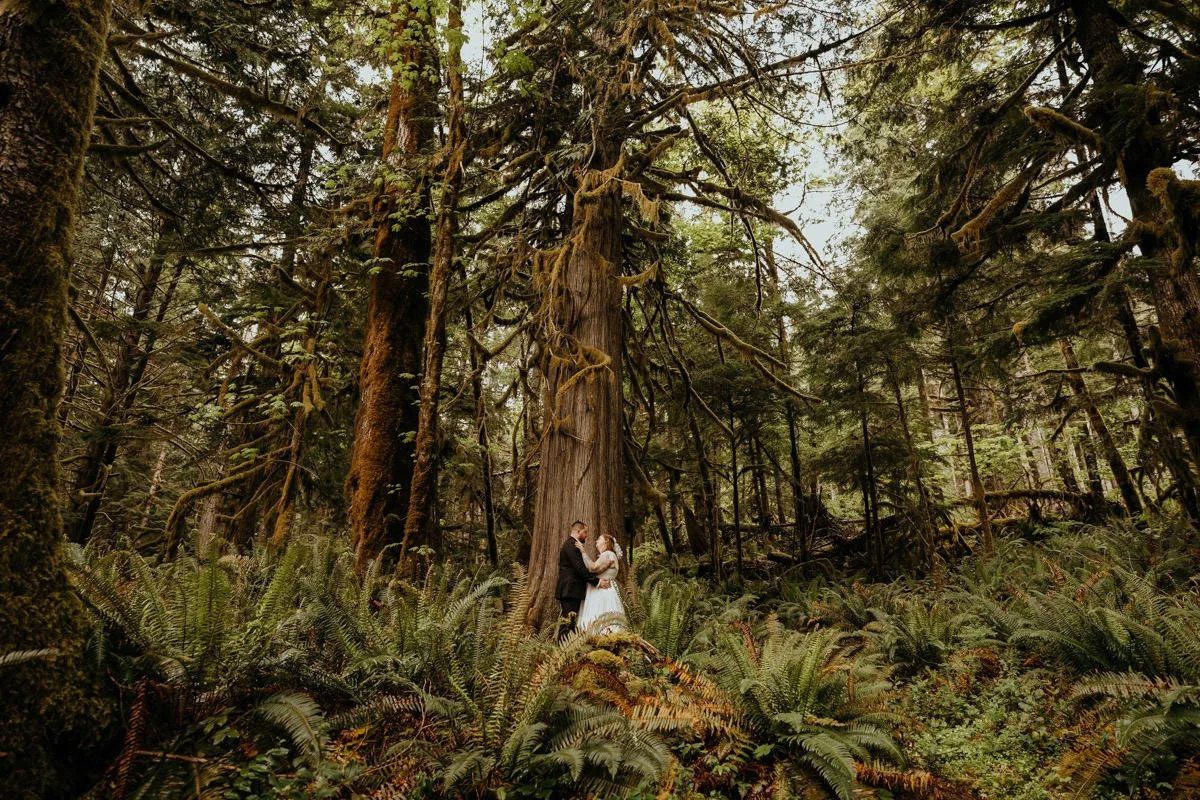
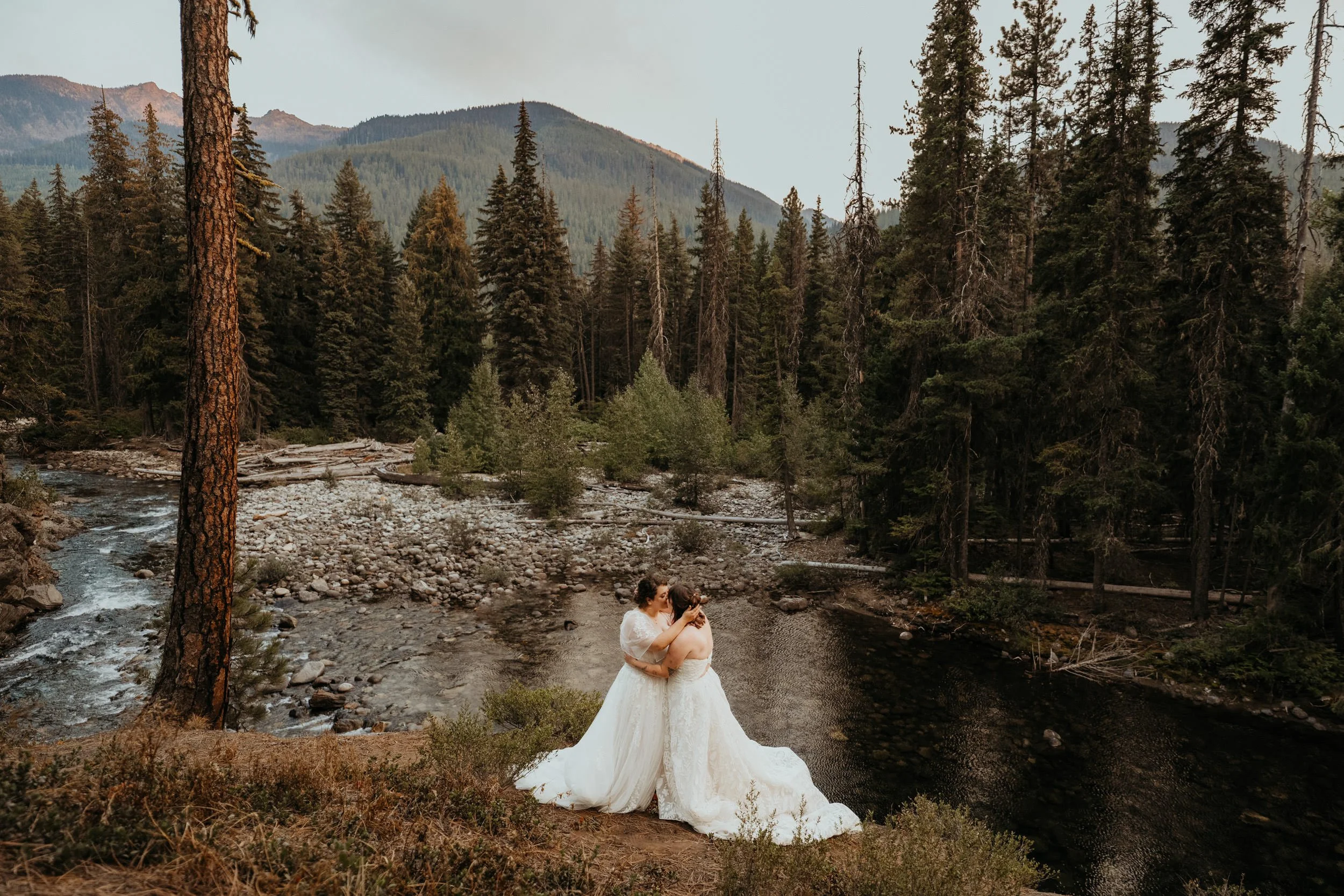
Spring in the Pacific Northwest is lush, variable, and quietly beautiful. While lower elevations begin to green up early, snow often lingers in the mountains well into June — and sometimes early July — limiting access to many high-alpine locations. In contrast, rainforests, coastlines, islands, and lower-elevation mountain areas come alive with moss, ferns, rushing waterfalls, and fresh growth.
Daytime temperatures at lower elevations typically range from the 40s to 60s, gradually warming as summer approaches. At higher elevations, colder temperatures and snowpack remain common well into the season. Fog, rain, sun breaks, and dramatic cloud cover are all part of the spring experience.
As with all seasons in the Pacific Northwest, spring conditions vary year to year based on snowpack and weather patterns. The most successful spring elopements are planned with flexibility and multiple backup options in mind.
Spring is best for couples who want:
Waterfalls, rivers, and lakes at peak flow
Lush forests, mossy trails, and vibrant greens
Fewer crowds than peak summer months, especially on weekdays and outside holiday weekends
Cooler temperatures and softer, more diffused light
Wildlife activity and quieter landscapes
Things to consider when planning a spring elopement
Snow & accessibility: Many high-elevation roads, trails, and scenic viewpoints remain snowed in throughout spring. Spring elopements often focus on coastal areas, rainforests, islands, and lower-elevation mountain regions unless you’re specifically planning for snow travel.
Seasonal road openings: Road access varies significantly from year to year depending on snowfall and maintenance schedules. Popular routes may open later than expected, and temporary closures are common. It’s important to check conditions frequently and plan backup locations.
Weather variability: Spring weather can shift quickly. Fog, rain, and cloud cover are common — and often add to the atmosphere — but flexibility is key. Building multiple location options into your plan helps ensure weather enhances your day rather than derailing it.
Daylight considerations: Days are getting longer, but sunrise and sunset times still vary widely in early spring. This season often works well for mid-day or early evening ceremonies without the late nights that come with peak summer.
Best locations for spring elopements in the Pacific Northwest
Olympic National Park & the Olympic Peninsula (rainforests, coastlines, waterfalls) — check out our Olympic Elopement Guide
Mount Rainier National Park (lower-elevation forests, rivers, and waterfalls — alpine areas still covered in snow)
Columbia River Gorge (spring wildflowers and peak waterfall season)
Snoqualmie Pass and nearby lower-elevation forested areas
San Juan Islands (mild temperatures, coastal scenery, and fewer crowds)
Spring is especially well-suited for coastal and rainforest elopements, where access remains reliable while higher alpine areas are still buried in snow.
See What Spring Elopements Really Look Like
Spring in the Pacific Northwest is all about contrast — fresh green growth against lingering snow, misty mornings that turn into soft light, and landscapes that feel quiet and alive at the same time. It’s a season that rewards flexibility and often surprises couples in the best ways.
If you’re considering a spring elopement, browsing real galleries from this season can help set realistic expectations and spark ideas. These spring elopements showcase a range of weather conditions, locations, and timelines — from rainforest and coastal settings to lower-elevation mountain landscapes — so you can see how spring actually unfolds.
→ Browse Spring Elopement Galleries


Summer Elopement Season (Late July to Mid-September)
What summer elopements in the PNW are really like
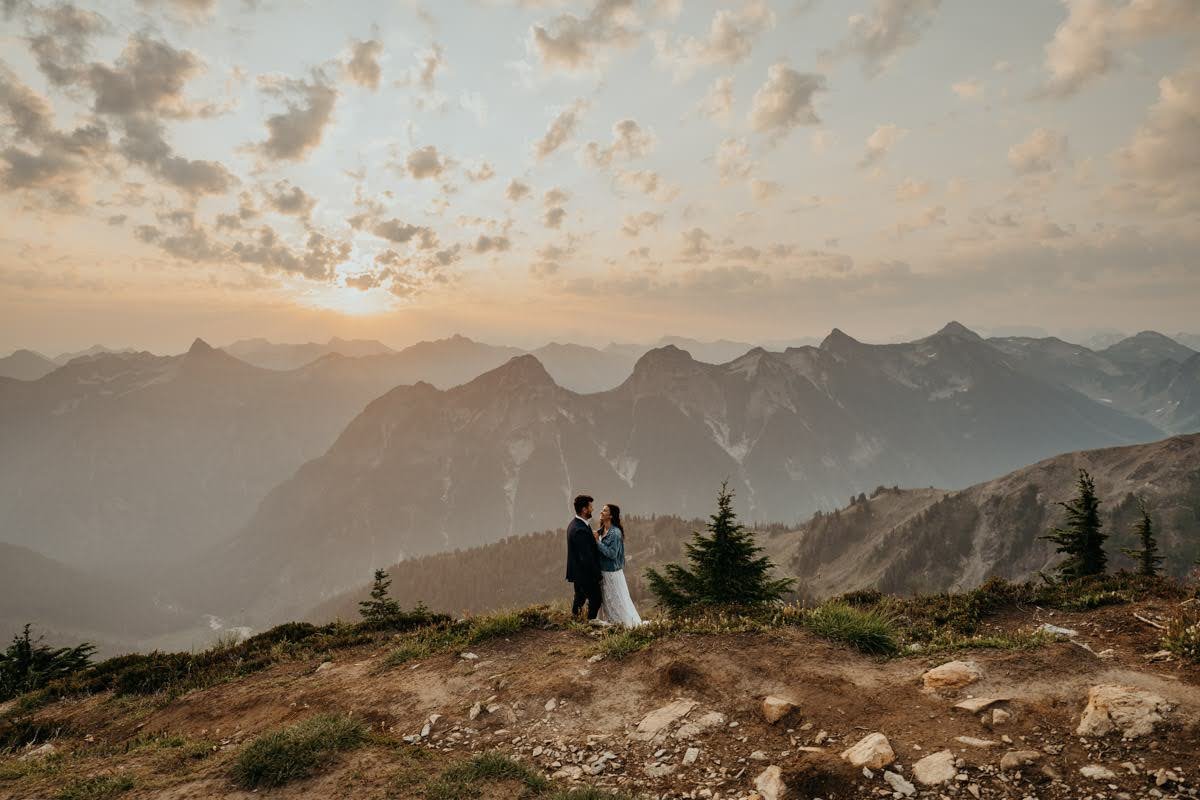
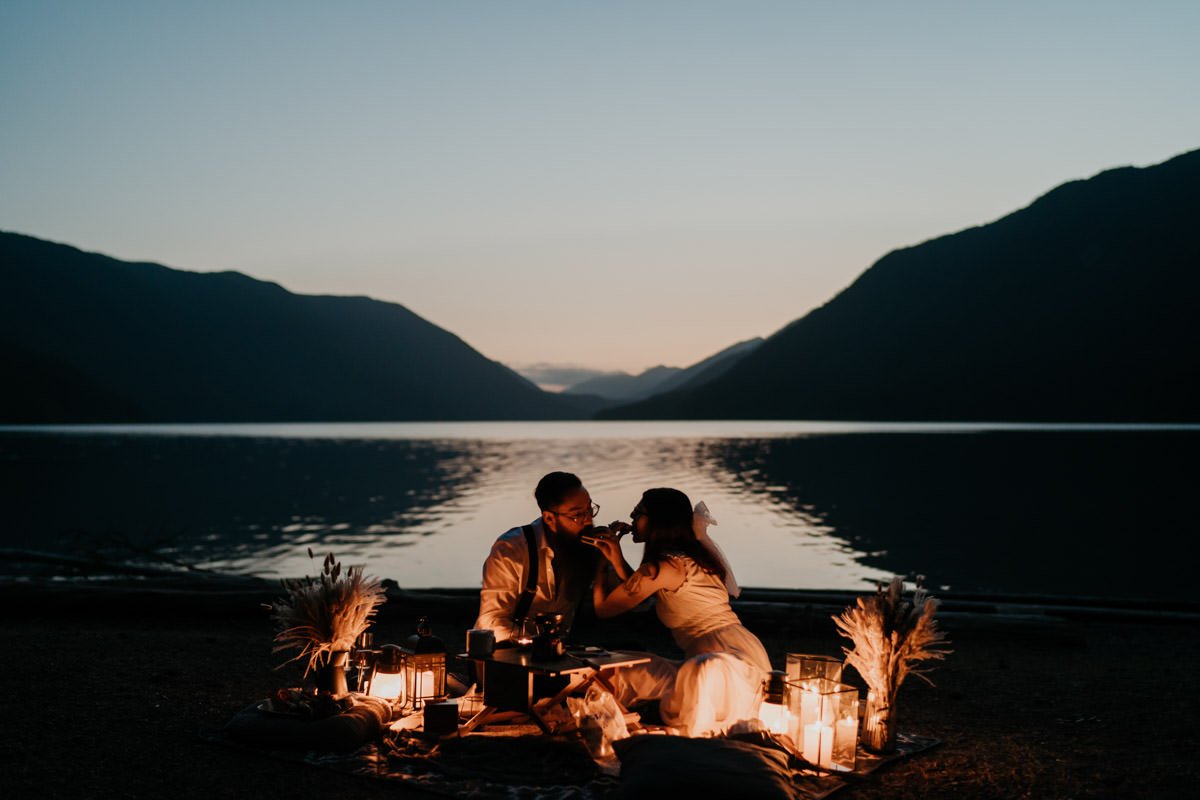
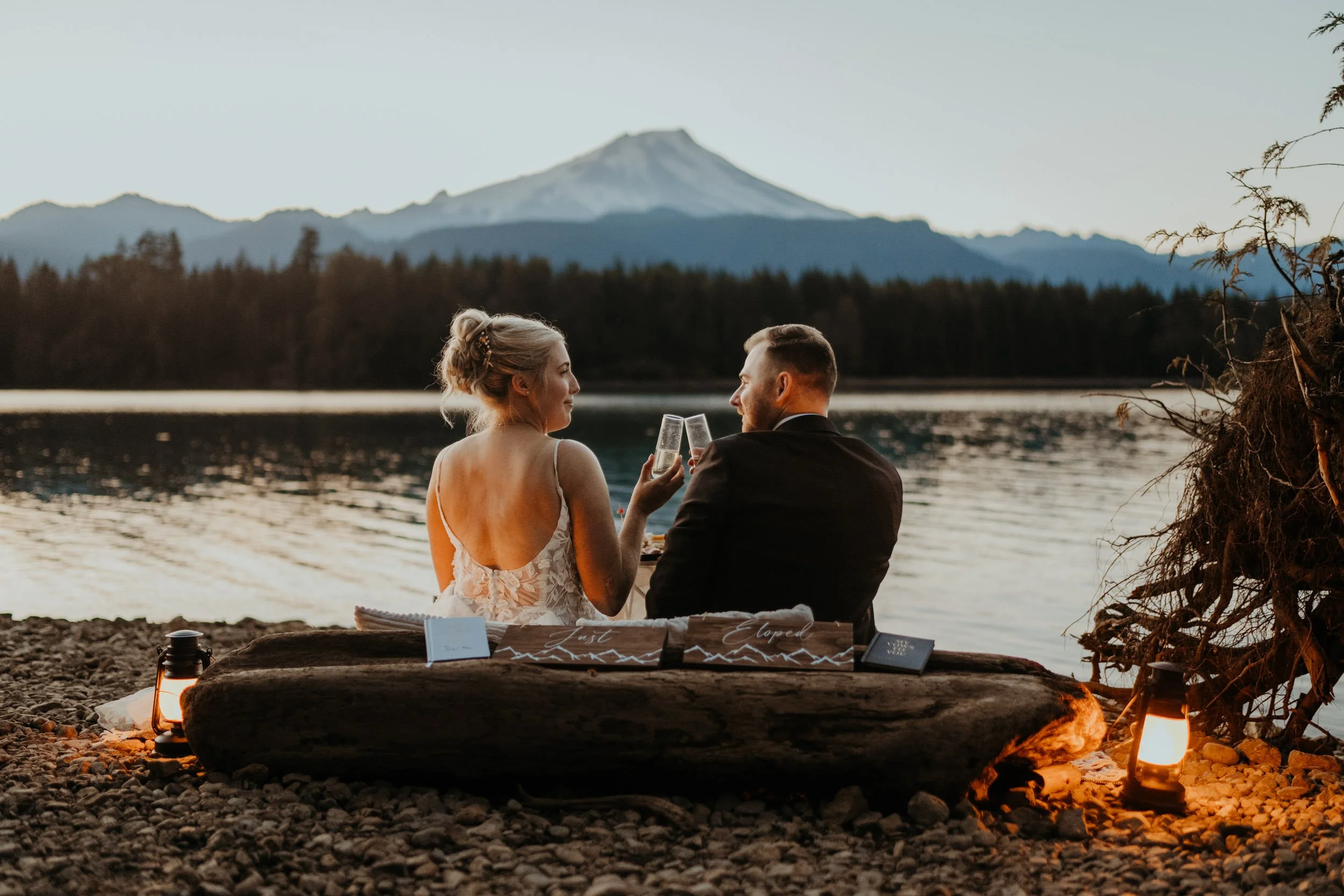
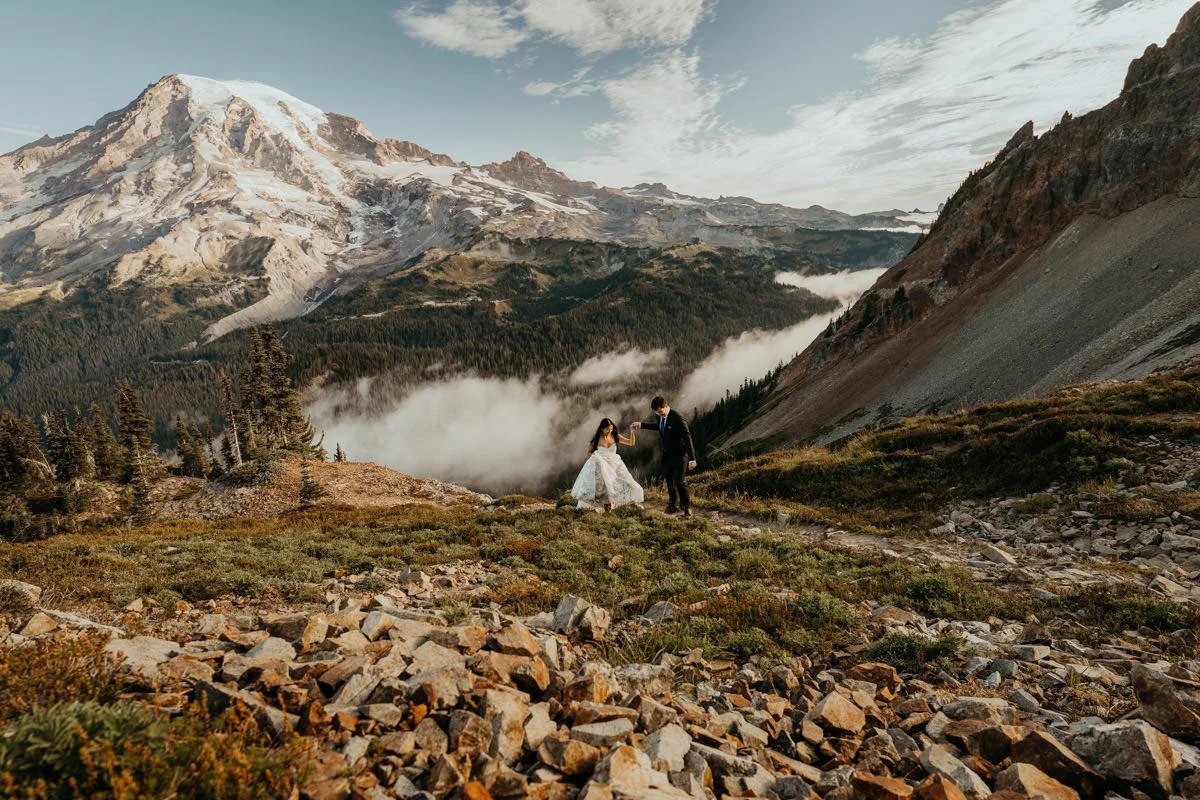
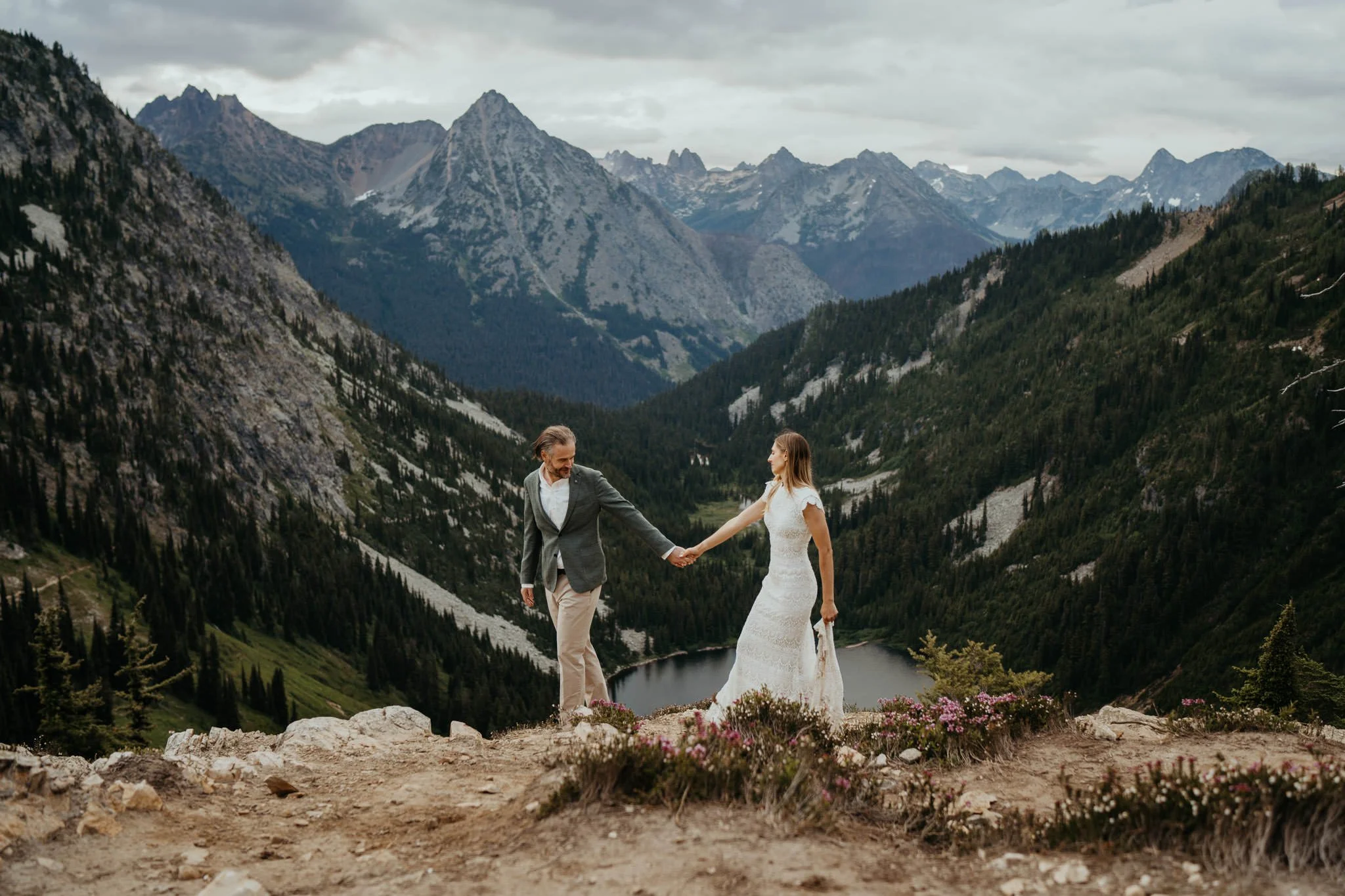
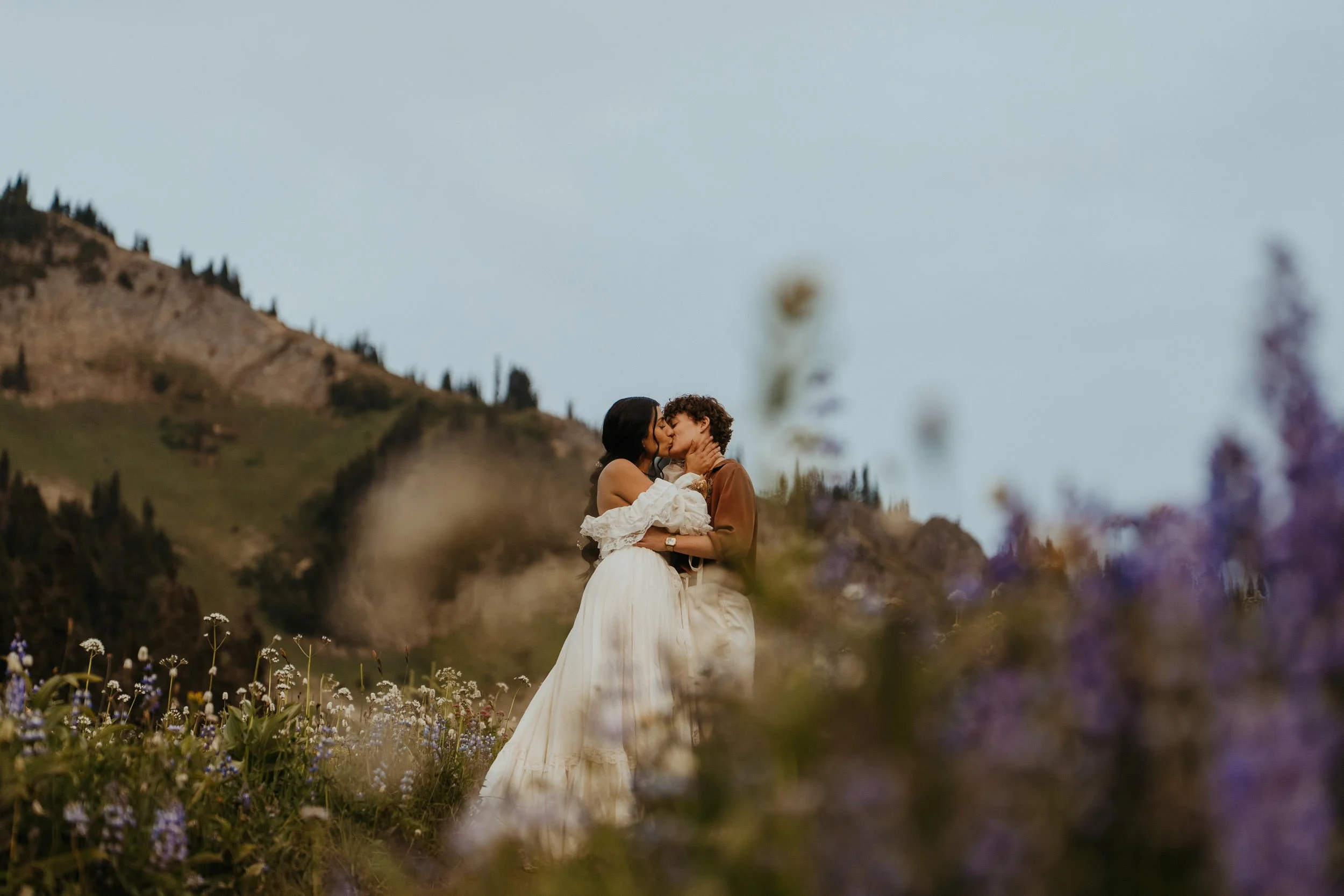
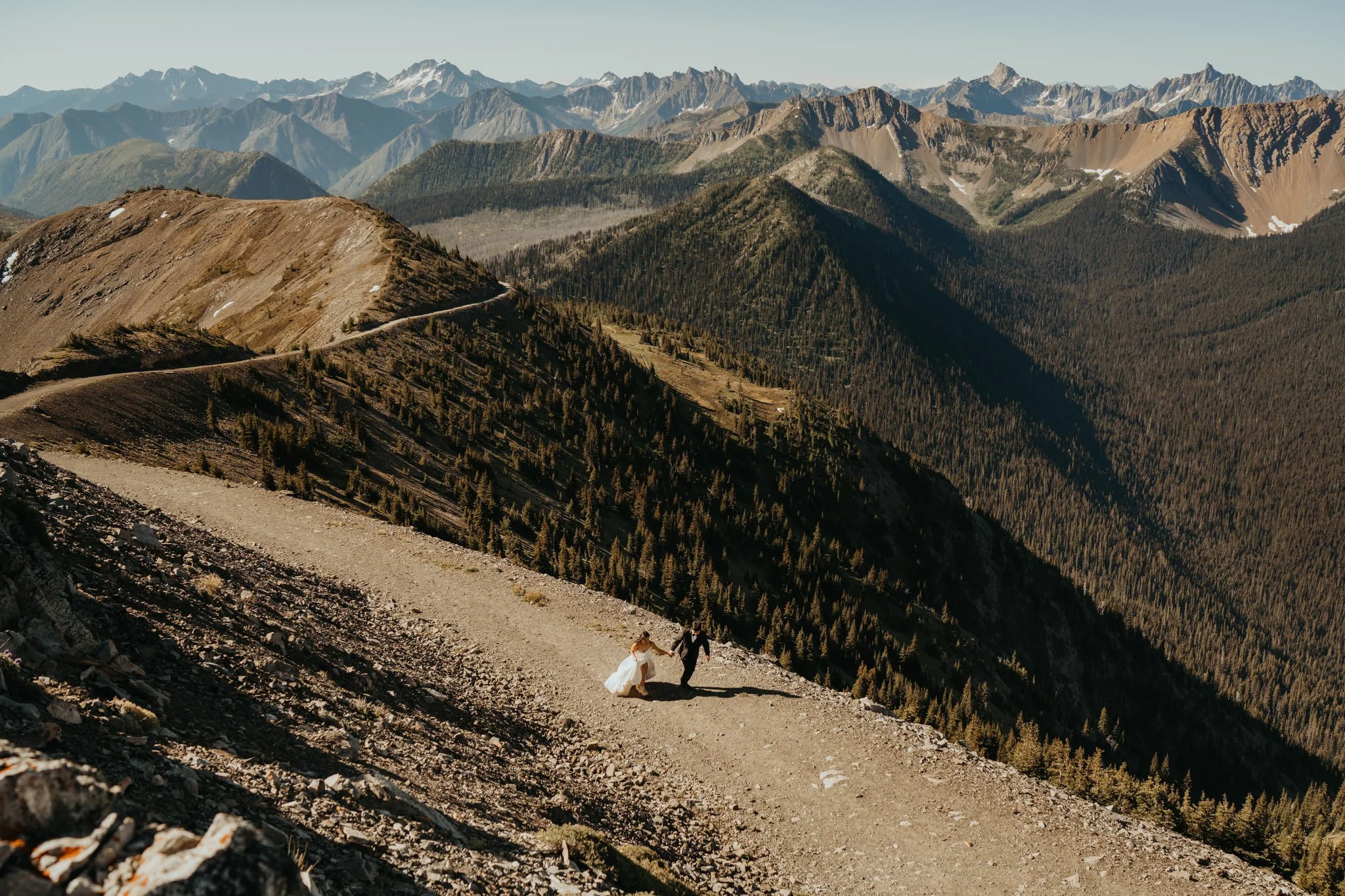
Summer in the Pacific Northwest is when the highest-elevation landscapes finally open up. Snow melts back from alpine roads and trails, wildflowers bloom in the subalpine, and long daylight hours make it possible to experience big landscapes without rushing the day.
This is also the driest and most popular elopement season in the region. Lower elevations typically see daytime temperatures in the 70s to low 80s, while higher elevations are often cooler and more comfortable. Rain is less frequent than other seasons, but it still happens — especially in the mountains — and conditions can vary widely by location.
Because access is at its peak, summer offers the widest range of elopement locations in the Pacific Northwest. It also brings heavier crowds, stricter permit oversight in some areas, and a greater need for thoughtful planning around timing, logistics, and backup options.
Summer is best for couples who want:
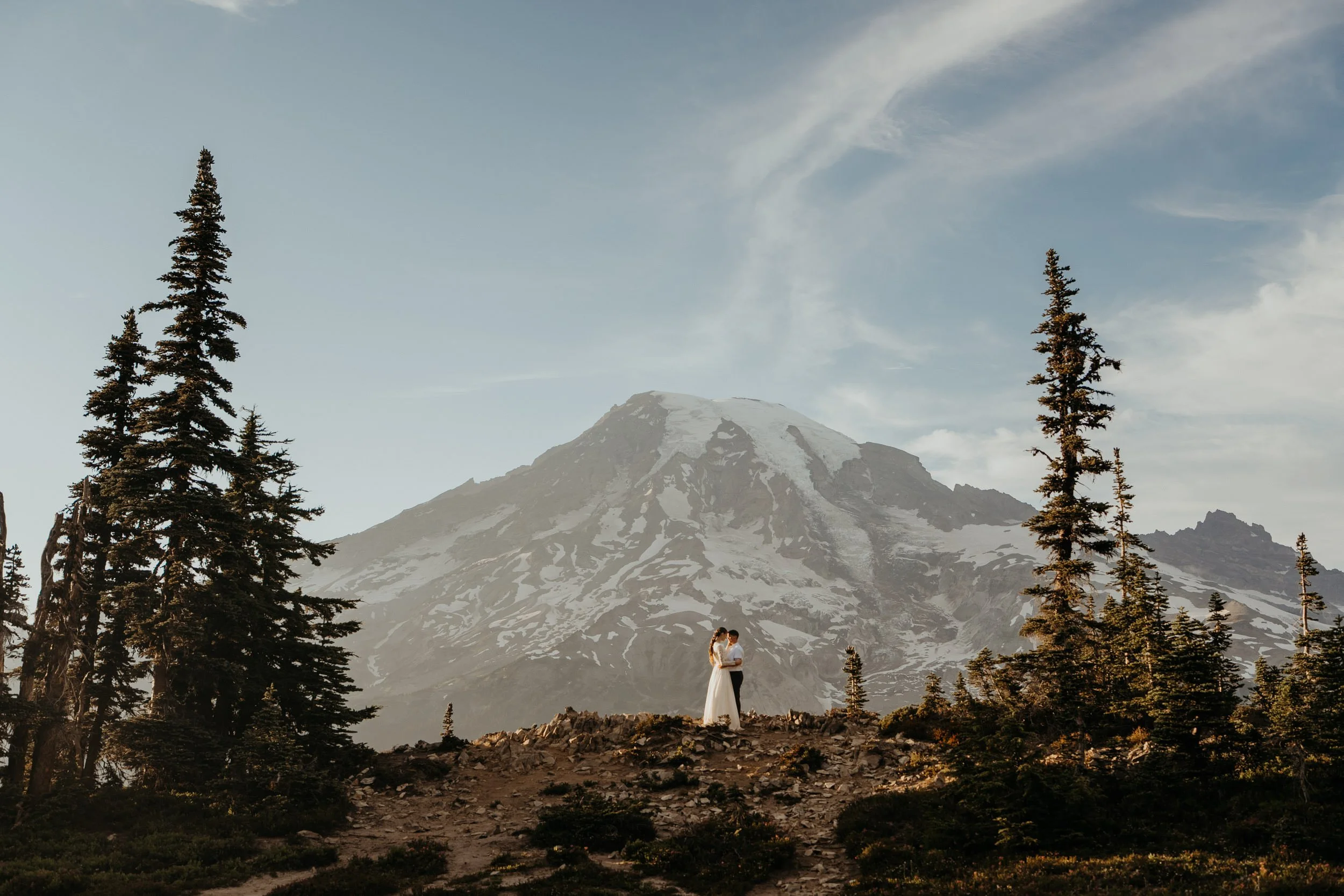
High-alpine views, mountain lookouts, and expansive landscapes
Wildflower meadows and snow-free trails
Long days with flexible timelines and extended golden hour
The greatest variety of accessible locations across the region
Warmer weather, especially at elevation
Things to consider when planning a summer elopement
Crowds & timing: Summer is peak season for national parks and popular mountain areas. Trails, parking lots, and overlooks can be busy — particularly on weekends and holidays. Sunrise ceremonies, weekday dates, and less-trafficked trail systems can make a huge difference in both privacy and experience.
Heat at lower elevations: While mountain locations stay relatively cool, lower elevations can feel hot during mid-day. Planning earlier or later in the day helps avoid heat and harsh midday light.
Wildfire & smoke risk: Summer is wildfire season in the Pacific Northwest. While smoke conditions vary widely year to year, it’s important to plan with multiple backup locations — often including coastal or rainforest options — in case air quality or access changes close to your date.
Road closures & maintenance: Even in summer, road closures can occur due to construction, accidents, or late-clearing snow at higher elevations. Checking conditions frequently and staying flexible remains important.
Long daylight hours: Summer brings the longest days of the year, with late sunsets and extended twilight — especially in early summer. This allows for relaxed timelines, but it’s still important to plan intentionally so the day doesn’t feel overly stretched.
Best locations for summer elopements in the Pacific Northwest
North Cascades National Park & surrounding alpine areas — check out our North Cascades + Mt. Baker Elopement Guide
Mount Baker–Snoqualmie National Forest
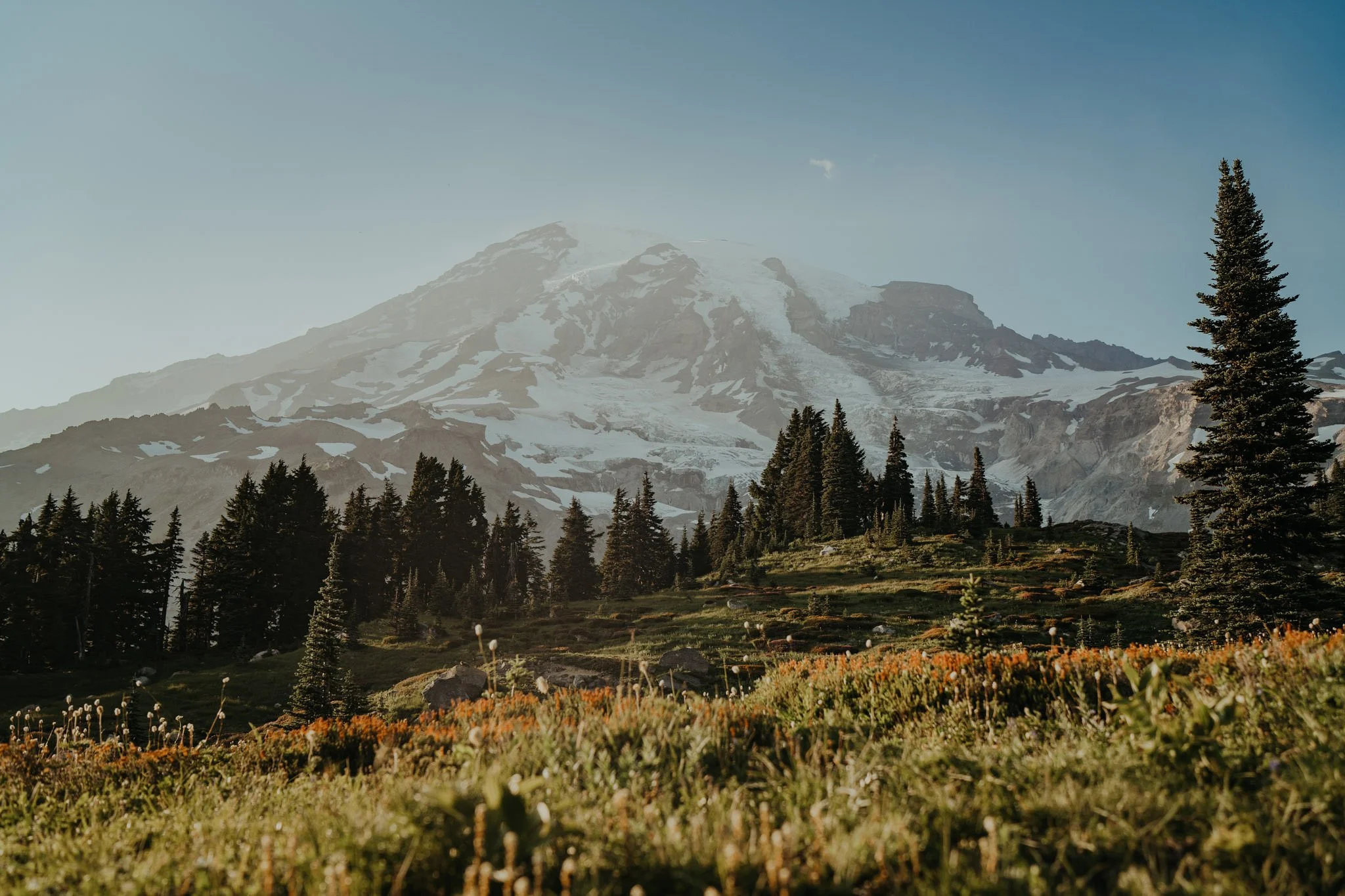
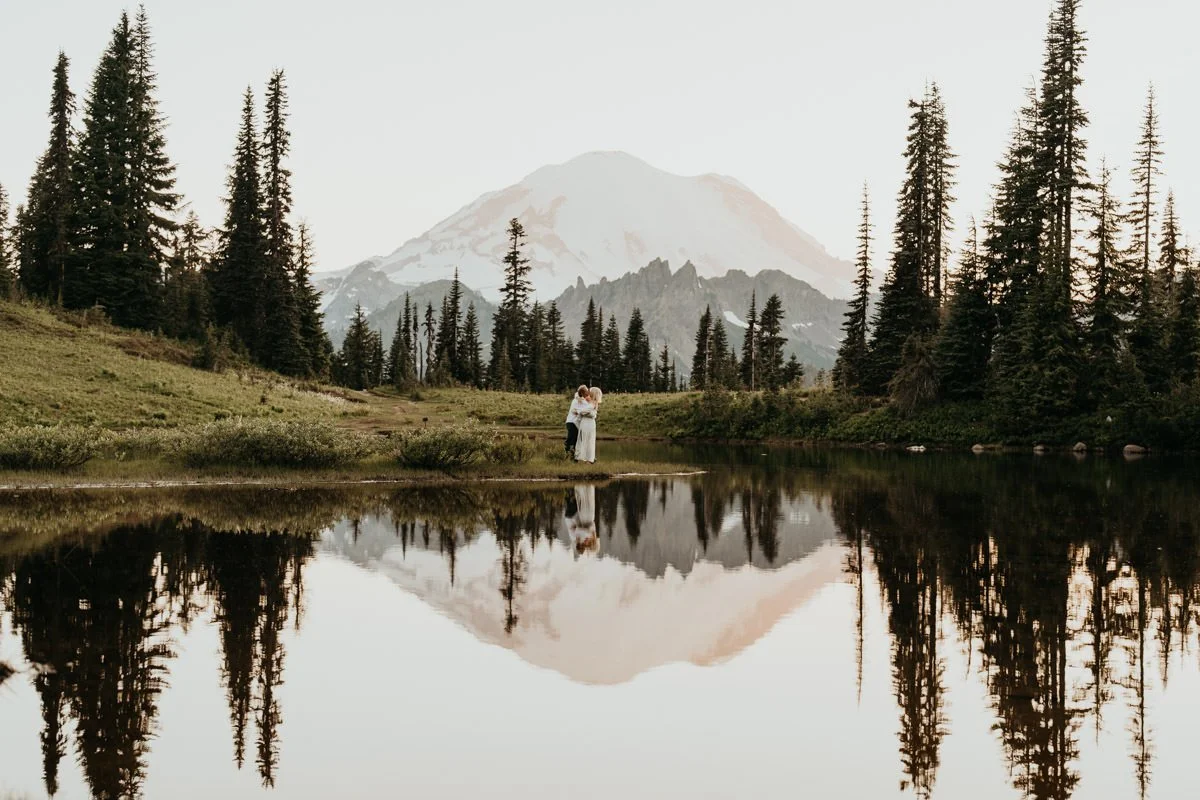
Mount Rainier National Park (subalpine meadows and high-elevation areas) — check out our Mt. Rainier Elopement Guide
Olympic National Park (mountains, lakes, coastlines, and rainforests) — check out our Olympic Elopement Guide
Alpine Lakes Wilderness
Select fire lookouts and backcountry viewpoints (where access and permits allow)
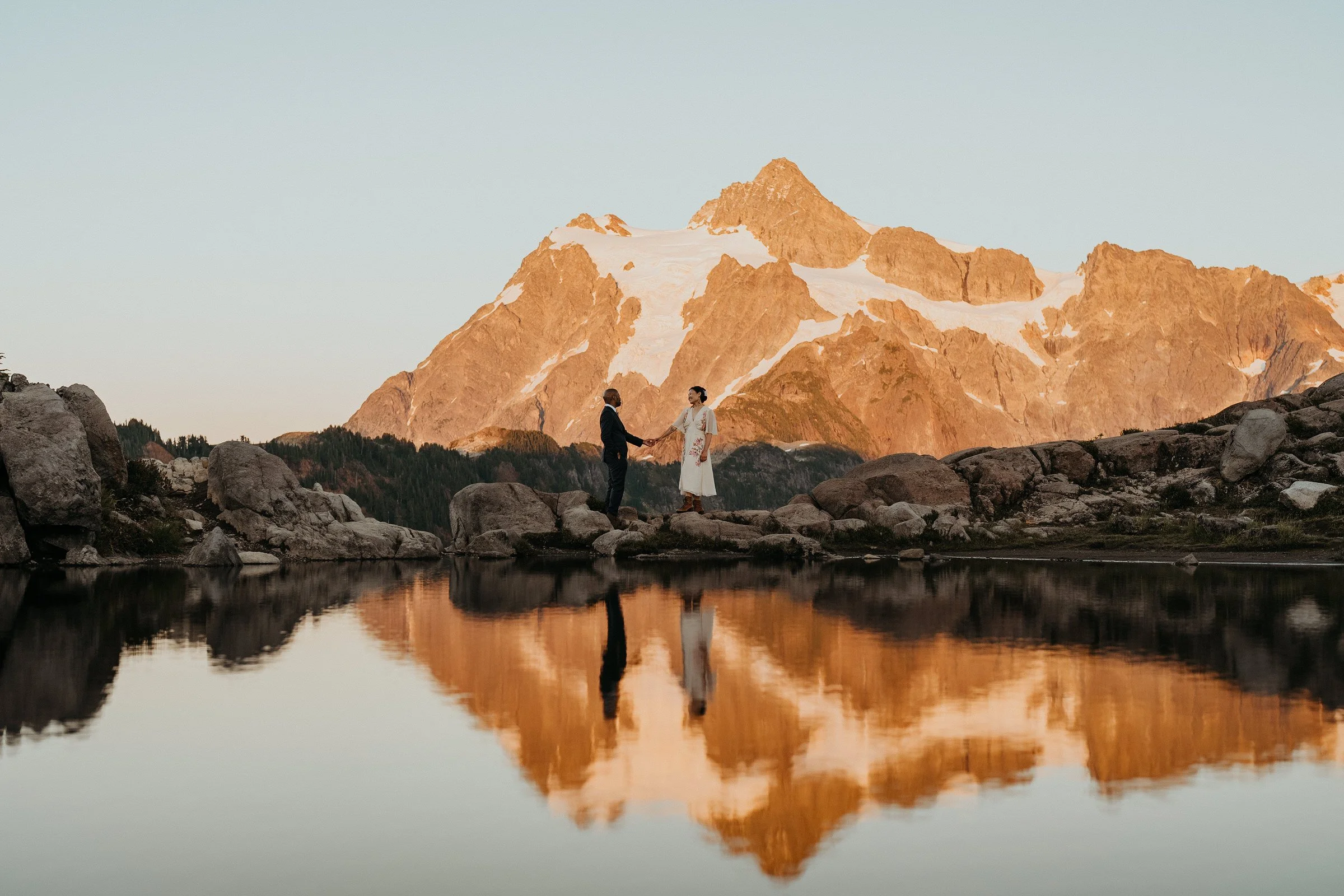
Summer offers unmatched access to the Pacific Northwest’s most dramatic landscapes — with the tradeoff of higher crowds and the need for proactive planning.
See What Summer Elopements Really Look Like
Every season in the Pacific Northwest has its own rhythm, light, and atmosphere — and no two elopements look the same.
If you want to see how summer elopements actually unfold, explore real galleries from this season below. These examples show a range of locations, weather conditions, timelines, and experiences, so you can get a clearer sense of what’s possible and what resonates most with you.
→ Browse Summer Elopement Galleries


Fall Elopement Season (Late September to November)
What fall elopements in the PNW are really like
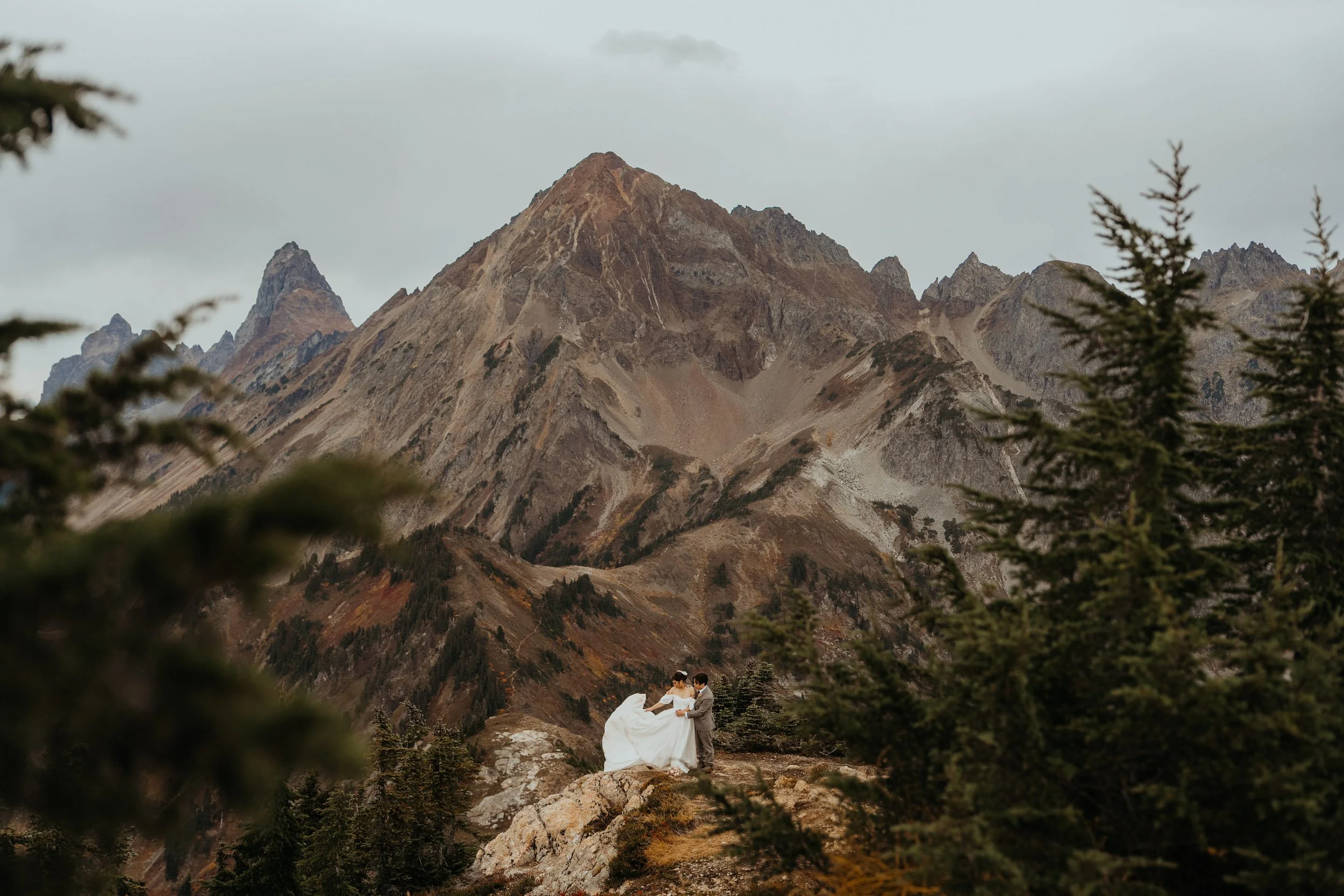
Fall in the Pacific Northwest is quieter, moodier, and more transitional than most people expect. Early autumn often brings cooler temperatures, fewer crowds, and lingering access to higher-elevation landscapes. As the season progresses, weather becomes more variable, daylight shortens quickly, and snow can begin returning to the mountains — sometimes earlier than anticipated.
Lower elevations and forested areas shift into rich autumn color, while subalpine larch trees turn gold in parts of the North Cascades. Rain becomes more frequent later in the season, and fog, low clouds, and dramatic skies are common — especially in October and November.
Fall is a season of tradeoffs: fewer people and deeper atmosphere, balanced against shorter days and more unpredictable conditions. For couples who value mood and intimacy over predictability, it can be one of the most rewarding times to elope.
Fall is best for couples who want:
Fewer crowds than summer, particularly after peak tourist season
Moody weather, soft light, and dramatic skies
Autumn color in forests and select alpine areas
Cooler temperatures and quieter trails
A more intimate, less “busy” feeling overall
Things to consider when planning a fall elopement
Shortening daylight: Daylight hours decrease rapidly in fall. By late October and November, daylight is limited, making sunrise or mid-day ceremonies more practical than late-evening plans.
Weather variability: Fall weather can shift quickly, especially as storms begin to move back into the region. Rain, fog, and cloud cover are common — and often beautiful — but flexibility and layered planning are essential.
Early snow at elevation: High-elevation roads and trails may close earlier than expected due to snow, sometimes with little notice. Access to alpine areas becomes increasingly uncertain as fall progresses.
Seasonal closures: Some facilities, roads, and visitor services close for the season in fall. It’s important to check current conditions and plan with alternatives in mind.
Best locations for fall elopements in the Pacific Northwest
North Cascades (including larch areas when conditions allow) — check out our North Cascades + Mt. Baker Guide
Olympic Peninsula (rainforests, coastlines, and lakes)
Mount Rainier National Park (early fall at subalpine elevations) — check out our Mt. Rainier Guide
Columbia River Gorge (forests, rivers, and fall color)
Low- to mid-elevation mountain areas with reliable access
Fall elopements tend to favor flexible locations where weather adds to the experience rather than limits it — especially as the season progresses.
See What Fall Elopements Really Look Like
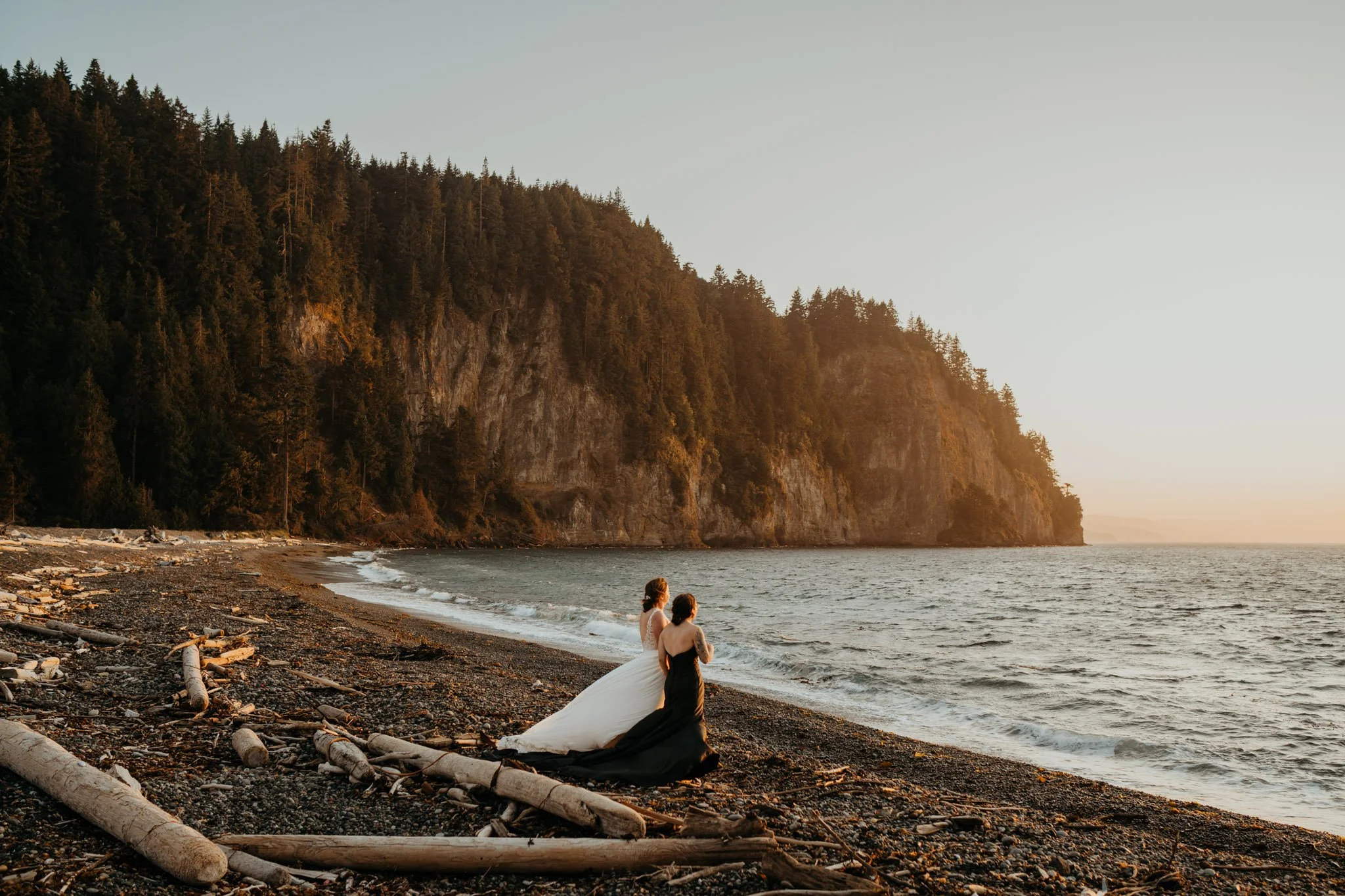
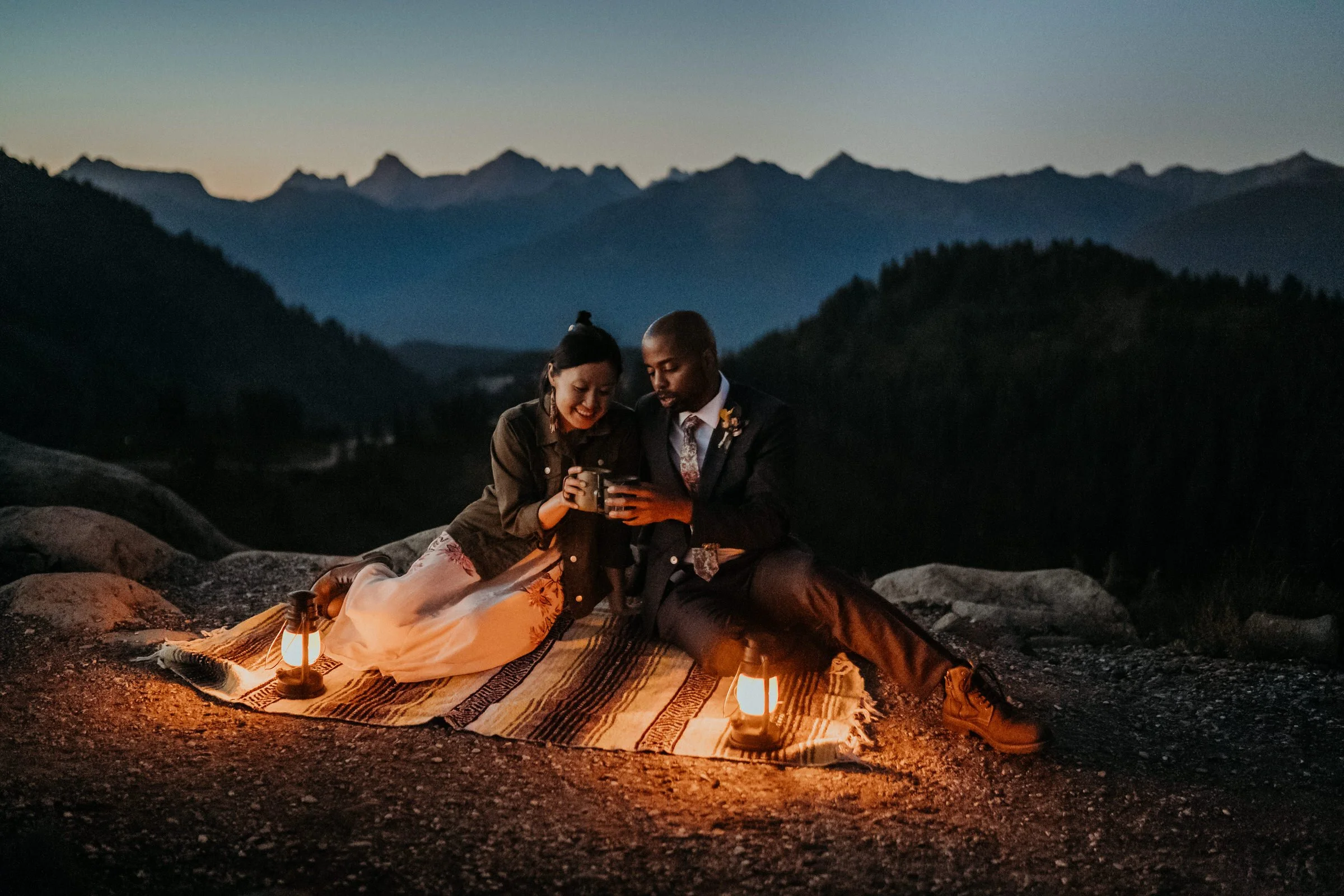
Fall elopements in the Pacific Northwest are often defined by atmosphere more than spectacle — drifting fog, quiet trails, muted color palettes, and moments that feel deeply personal and unhurried.
If you’re considering a fall elopement, exploring real galleries from this season can help you understand how changing weather, shorter days, and evolving access shape the experience. These fall elopements highlight a range of locations and conditions, offering a realistic look at what this season truly feels like.
→ Browse Fall Elopement Galleries


Winter Elopement Season (December to Mid March)
What winter elopements in the PNW are really like
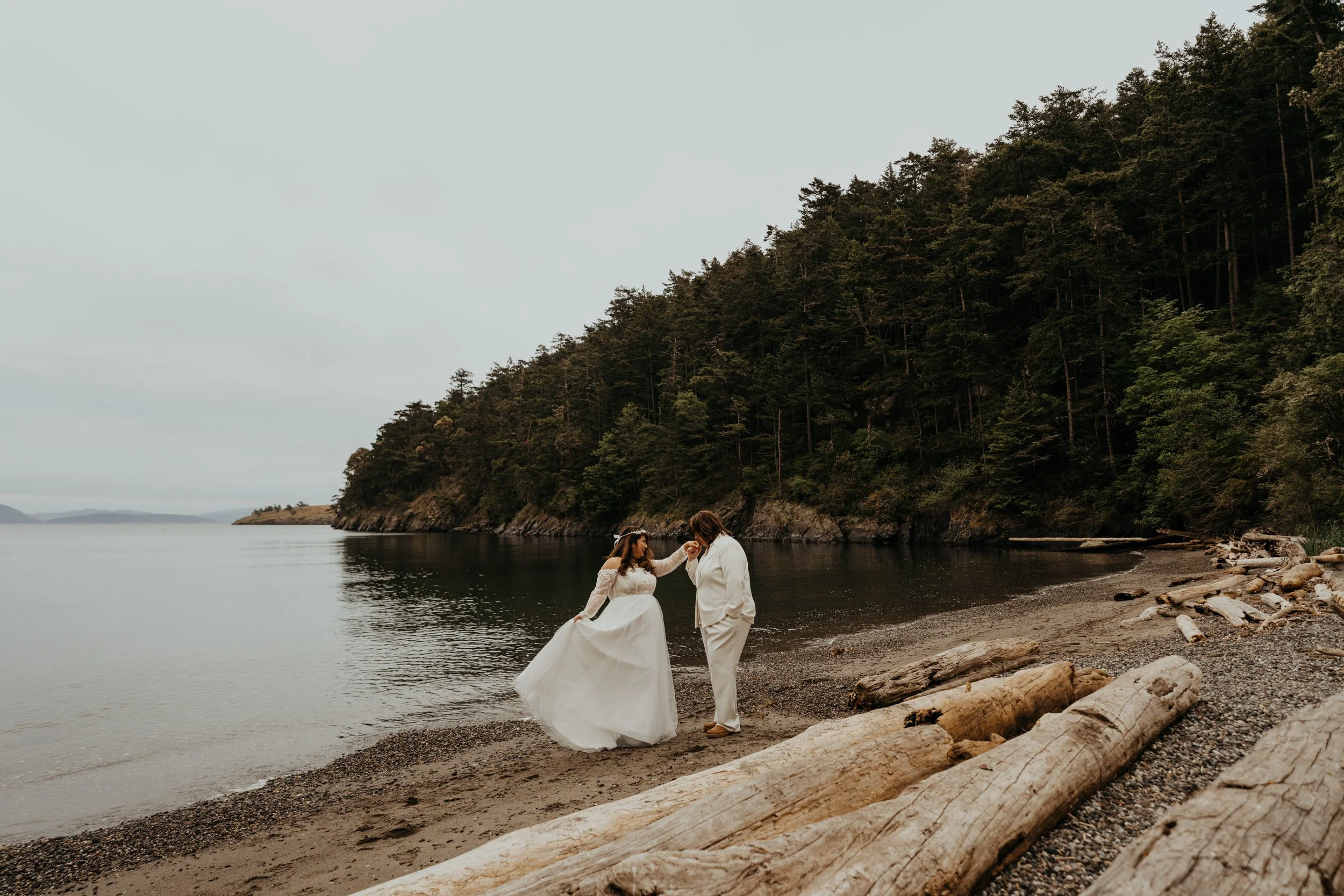
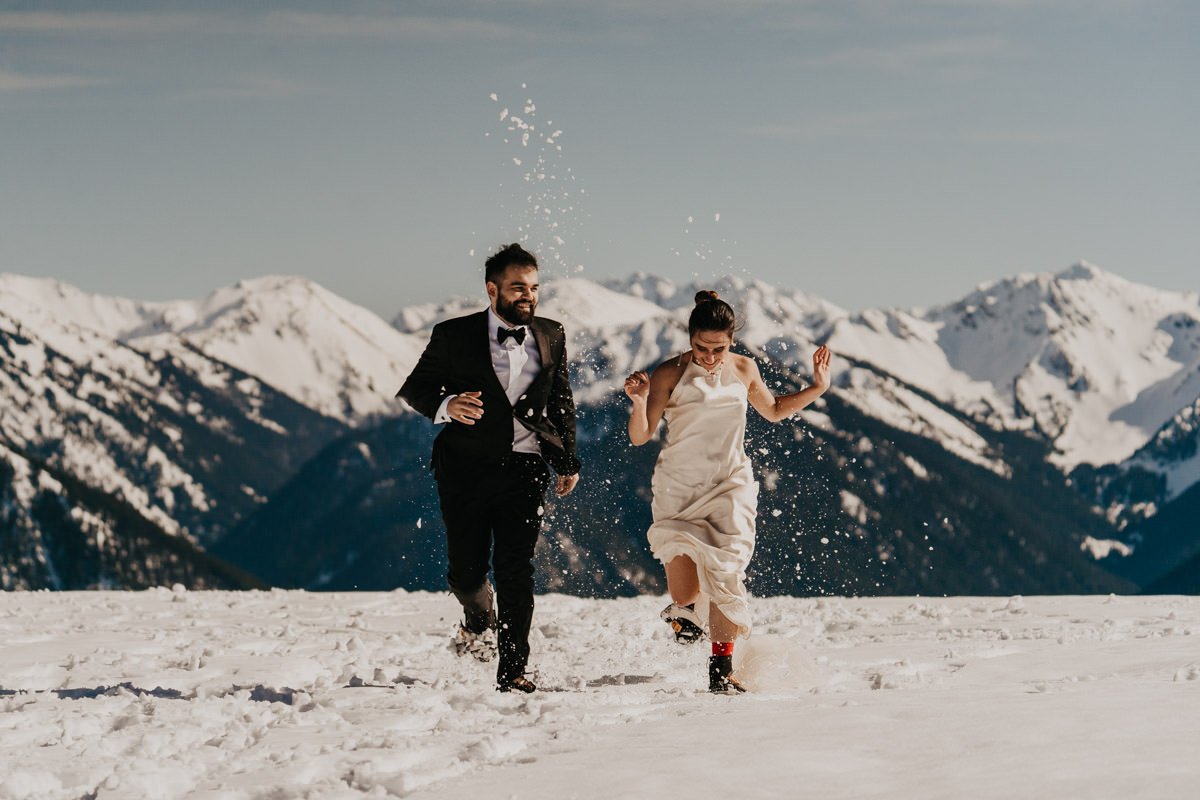
Winter elopements in the Pacific Northwest are quiet, intimate, and highly location-dependent. Snow blankets the mountains, many high-elevation roads close for the season, and access shifts dramatically compared to summer and fall. At the same time, rainforests, coastlines, and lower-elevation areas remain accessible — often feeling especially peaceful during the off-season.
Weather varies widely by location. Coastal and lowland areas tend to be cool and wet, with daytime temperatures often in the 30s to 50s. In the mountains, winter brings snow, cold temperatures, and limited access — sometimes requiring snowshoes, traction devices, or adjusted expectations around scenery and mobility.
Winter rewards couples who value atmosphere, simplicity, and privacy over sweeping alpine views. With thoughtful planning and realistic expectations, it can be one of the most intimate seasons to elope in the Pacific Northwest.
Winter is best for couples who want:
Maximum privacy and minimal crowds
Snowy landscapes or moody coastal and rainforest settings
A slower-paced, more intimate elopement experience
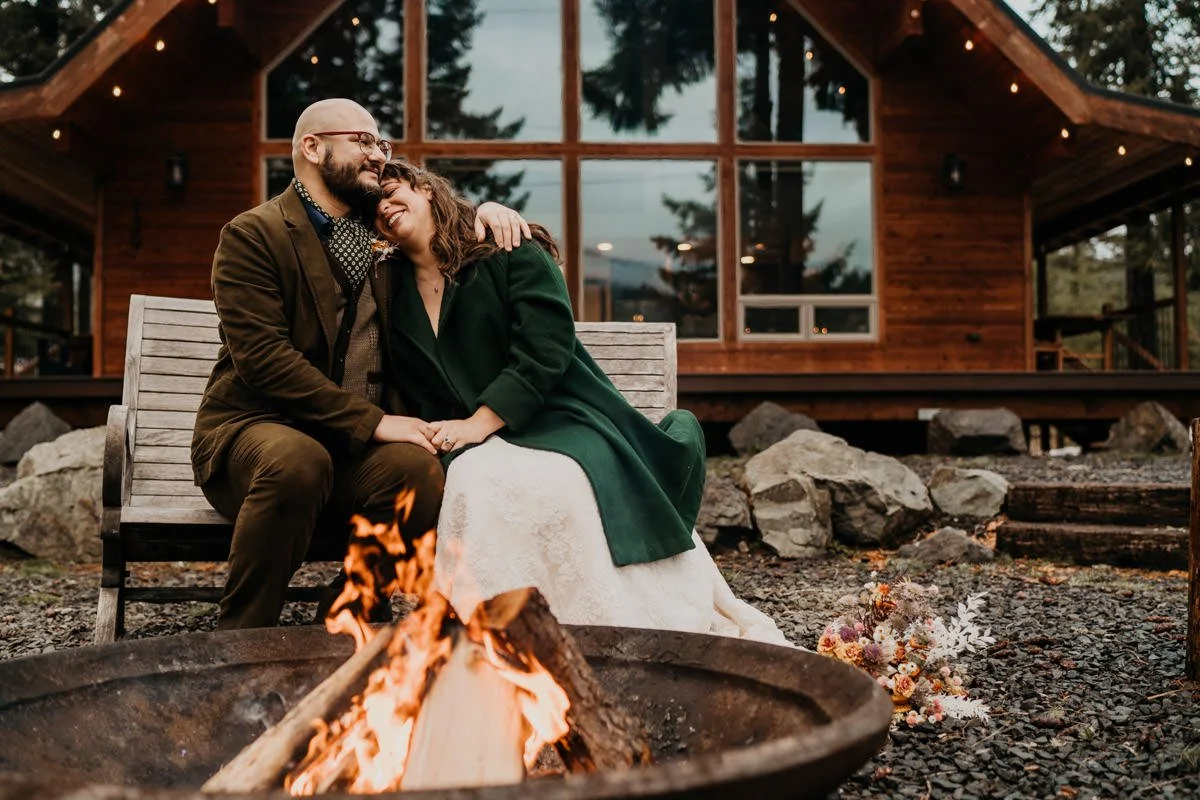
Cozy cabin stays and shorter, intentional timelines
A willingness to plan around weather and access limitations
Things to consider when planning a winter elopement
Limited access at elevation:
Most high-elevation roads, trails, and viewpoints close for winter due to snow. Winter elopements often focus on coastal areas, rainforests, islands, and lower-elevation mountain regions, unless you’re specifically planning for snow travel.
Weather & safety:
Winter conditions can change quickly. Snow, ice, wind, and heavy rain are all possible depending on location. Planning with conservative timelines, flexible locations, and appropriate gear is essential.
Short daylight hours:
Winter brings the shortest days of the year. Mid-day ceremonies tend to work best, allowing for comfortable light without rushing or navigating in the dark.
Travel considerations:
Winter weather can impact travel, including mountain passes and ferry schedules. Buffer time and backup plans are especially important during this season.
Best locations for winter elopements in the Pacific Northwest
Olympic National Park & the Olympic Peninsula (rainforests, low elevation alpine lakes, and rugged coastlines) — check out our Olympic Elopement Guide
San Juan Islands (quiet, off-season charm and coastal scenery)
Leavenworth, a Bavarian-style town in the Cascade mountains—so so cozy in the winter!
Packwood, a cozy town outside of Mount Rainier along the Cowlitz River—stay in a cozy riverside A-frame cabin
Select lower-elevation mountain areas with reliable winter access
Snow-covered locations accessible by maintained roads or short snowshoe routes (conditions permitting)
A cozy Airbnb with a view — instead of getting out into the outdoors, bring the views to you and book yourself a stay somewhere cozy and warm. One with a woodstove, a bathtub or hottub, a nice dining table, and a shelf full of board games
Winter elopements work best in places where weather and seasonality enhance the experience, rather than restrict it.
See What Winter Elopements Really Look Like
Winter elopements in the Pacific Northwest are less about grand scale and more about presence — quiet forests, misty coastlines, falling snow, and moments that feel deeply personal.
If you’re considering a winter elopement, browsing real galleries from this season can help you understand how winter light, weather, and access shape the day. These examples show a range of winter conditions and locations, offering a realistic look at what’s possible — and what makes winter elopements so uniquely meaningful.
→ Browse Winter Elopement Galleries

Climate data & averages
Seattle represents low-elevation, coastal climate patterns, while Paradise (Mt. Rainier) reflects high-elevation alpine conditions. Most elopement locations fall somewhere between these two extremes.
In practice, this means that spring and fall elopements often favor lower elevations and coastal areas, while summer offers the widest access to alpine locations. Winter conditions vary dramatically depending on elevation and proximity to the coast.
These are long-term averages and can vary year to year — conditions on your specific date may differ, especially at higher elevations.
Seattle
Elevation: 174 feet
Monthly average temperatures (source)
January: 37-47
February: 37-50
March: 39-54
April: 42-58
May: 47-65
June: 52-70
July: 56-76
August: 56-76
September: 52-71
October: 46-60
November: 40-51
December: 36-46
Average rainfall by month (source)
January: 18 days; 5.55 inches
February: 14 days; 3.46 inches
March: 16 days; 3.7 inches
April: 14 days: 2.68 inches
May: 12 days; 1.93 inches
June: 9 days; 1.54 inches
July: 5 days; 0.67 inches
August: 4 days; 0.87 inches
September: 7 days; 1.42 inches
October: 13 days; 3.46 inches
November: 18 days; 6.54 inches
December: 17 days; 5.31 inches
Paradise (Mt. Rainier)
Elevation: 5400 feet
Monthly average temperatures (source)
January: 21-33
February: 22-35
March: 22-37
April: 27-44
May: 32-50
June: 44-56
July: 44-64
August: 43-64
September: 39-57
October: 33-48
November: 37-41
December: 22-34
Average precipitation by month (source)
January: 11.71 inches
February: 8.15 inches
March: 7.45 inches
April: 5.71 inches
May: 4.83 inches
June: 3.86 inches
July: 1.62 inches
August: 1.52 inches
September: 3.56 inches
October: 7.89 inches
November: 13.39 inches
December: 10.47 inches
Weather & Conditions Resources
Planning an elopement in the Pacific Northwest means paying close attention to real-time conditions — not just averages or forecasts from a single app. Weather, road access, park alerts, and wildfire conditions can all change quickly, especially in mountain and coastal environments.
These are the tools we rely on most when planning elopements and making day-of decisions. They help us monitor weather patterns, access conditions, and safety considerations so we can plan thoughtfully, adapt when needed, and keep your experience smooth and stress-free.
(We don’t expect our couples to have all these apps — this list is here as a resource for anyone wanting to plan an elopement or other outdoor recreation in the area.)
Our Preferred Weather Sites & Apps
Windy.app — Our primary weather tool. Excellent for visualizing wind, precipitation, temperature, cloud cover, and weather systems at a glance. Especially helpful for understanding how weather is moving through an area, not just what a single forecast says.
National Weather Service — A reliable source for official forecasts, alerts, and weather discussions.
Mountain Forecast — Excellent for elevation-specific forecasts in alpine and mountain areas.
OpenSnow — Best known for snow forecasts, but also helpful for tracking storm systems, snow levels, and overall mountain conditions — especially in winter and shoulder seasons.
Honorary mentions:
Clime – Detailed radar, precipitation, temperature layers, and short-term forecasts
Astrospheric – Cloud cover, transparency, KP index, and night-sky conditions — especially useful for sunrise, sunset, and stargazing plans.
Road Status & Travel Conditions
Washington State Department of Transportation (WSDOT) Real-Time Travel Map — Live road conditions, closures, construction, webcams, and incident alerts.
WSDOT Mountain Pass Reports & Webcams — Essential for winter, shoulder seasons, and high-elevation travel.
WSDOT Real-Time Travel Data — Search by specific roadways or ferry routes.
WSDOT Mobile App & Twitter Accounts — Helpful for last-minute updates and alerts while traveling.
Park & Land Management Alerts
These pages provide the most accurate information on seasonal closures, permits, trail access, and safety notices.
Maps & Trail Information
Washington Trails Association — One of the best resources for trail conditions, recent trip reports, and seasonal access.
U.S. Forest Service — Interactive Visitor Map — Useful for understanding land management boundaries, roads, and trail systems.
AllTrails — Helpful for basic trail overviews, distance, and elevation, and recent user trail reports — best used alongside official sources.
Wildfire, Smoke & Air Quality
*Watch Duty — One of the most reliable tools for tracking active wildfires, evacuation notices, and incident updates in real time. Especially useful during summer and fall when fire activity may impact air quality, access, or travel routes. If you live in wildfire-prone region, install this app on your phone right now. Thank me later.
IQAir – Live Air Quality Map — Track real-time air quality and smoke impacts for specific locations (e.g., Seattle AQI).
Northwest Fire Locations Map (NWCC) — Regional overview of active fires across the Pacific Northwest.
InciWeb – Incident Information System (Washington & USA) — Official incident updates, closures, and fire perimeters.
Washington State Department of Natural Resources (WA DNR) – Wildfire Resources & Burn Restrictions — Fire restrictions, prevention notices, and statewide updates.
WA DNR Wildfire (@waDNR_fire) on Twitter — Useful for fast-moving updates during fire season.
Flexibility is Key to Planning an Adventure Elopement
Eloping in the Pacific Northwest is less about choosing the “perfect” month and more about understanding how seasons, locations, and conditions work together. Weather shifts, access changes, and landscapes evolve throughout the year — and those variables are part of what make this region so compelling.
The most meaningful elopements aren’t built around rigid expectations. They’re built around thoughtful planning, flexibility, and choosing a season that supports the experience you want to have — whether that means wildflowers and waterfalls, high alpine views, moody fall weather, or quiet winter landscapes.
Feel free to explore our detailed elopement guides for the North Cascades + Mt. Baker, Mount Rainier, and the Olympic Peninsula to dive deeper into each region.
If you’re feeling unsure about timing, locations, or how to plan around changing conditions, that’s normal. Helping couples navigate those decisions — and adapt when plans need to shift — is a core part of how we approach elopement planning in the Pacific Northwest.
Whenever you’re ready, explore real elopement galleries from each season, or reach out to start a conversation about what kind of experience you’re envisioning. There’s no one right way to elope here — just the way that feels most true to you.
Planning a Washington Elopement?
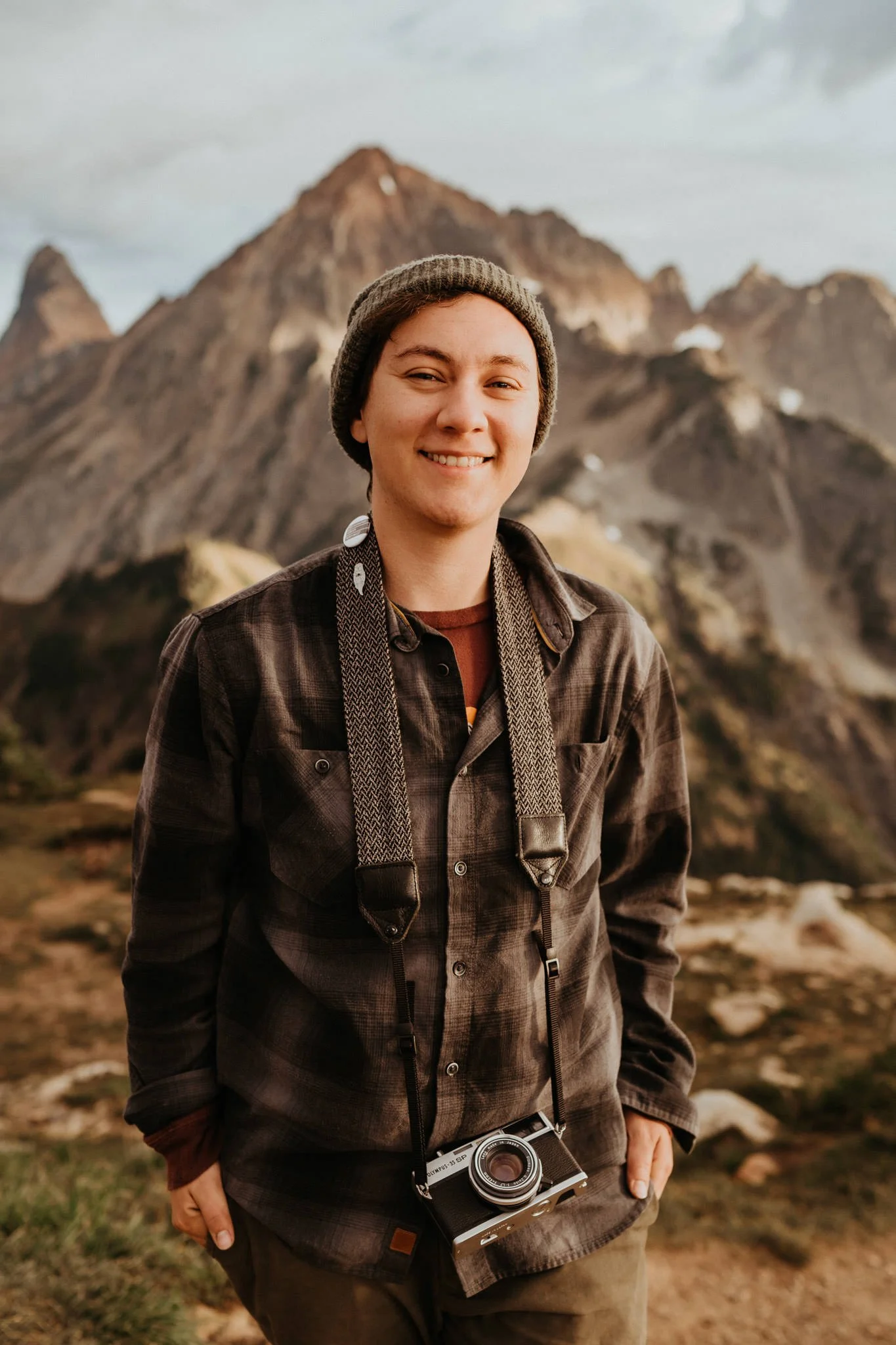
I’m Ashton, an adventure elopement photographer and guide who’s helped hundreds of couples plan incredible elopements across Washington state.
Think of me as your wilderness guide for all things elopement — I’ll handle the logistics so you two can focus on the experience.
YOU MAY ALSO LIKE…