How to Plan an Elopement During Fire Season in Washington & Western US (2026 Guide)
Like it or not…
Fire Planning is Part of Elopement Planning
It’s 2026—I’m sitting here writing this after the most pleasant, sunny-60-degree walk here in Seattle in mid-February. Some of the cherry blossoms in Seattle have started to bloom. This year so far we’ve seen almost no snow, very little rain, across most of the western US. I’m bracing for an intense wildfire season.
On years like this wildfire is no longer an “if”, it is a “when” and a “where”. If you’re looking to elope anywhere in the western US or other active fire areas around the world, it’s crucial to understand the land’s relationship to fire. It’s important to be aware of:
Active wildfires — current, active wildfires and prescribed burns that prohibit access to your location
Recent burn areas — areas of recent burn that change the landscape and scenery in your location
Fire risk (high fire danger) — risk that a new fire might start
Smoke/air quality — smoke can drift for hundreds of miles. I’ve seen smoke drift all the way from Oregon, California, Canada, and last year smoke from California drifted all the way to the east coast
Timing Matters: Picking a Date with Fire in Mind
For Washington state specifically, here are the historically most and least risky times for wildfire activity:
Highest Risk Windows
Late July through late-September (historically peak fire activity in WA — hot, dry conditions)
Medium Risk Windows (Typically)
Late June–mid July (before peak dryness/summer heat — there may be lingering snow in some mountain areas)
Early October (cooler temps means fewer active starts, but some risk of lingering smoke from fire season)
Least Risk Windows (Typically)
Late October through May (cooler temps, more snow means the least risky time, not as many active starts)
What to Do With This Information
If you want to avoid wildfire best you can, consider a date in the shoulder season, late October/November through May. Think moody PNW vibes: fog, fall colors, moody days along the coast. It’s also so much quieter too, which can make for a romantic, intimate experience. (Honestly our favorite time of year and more people should absolutely consider these slower months!)
If you’re set on the brilliance of a Washington summer—alpine meadows, blooming flowers, jagged peaks, emerald alpine lakes—just know that fire/smoke is an inherent risk.
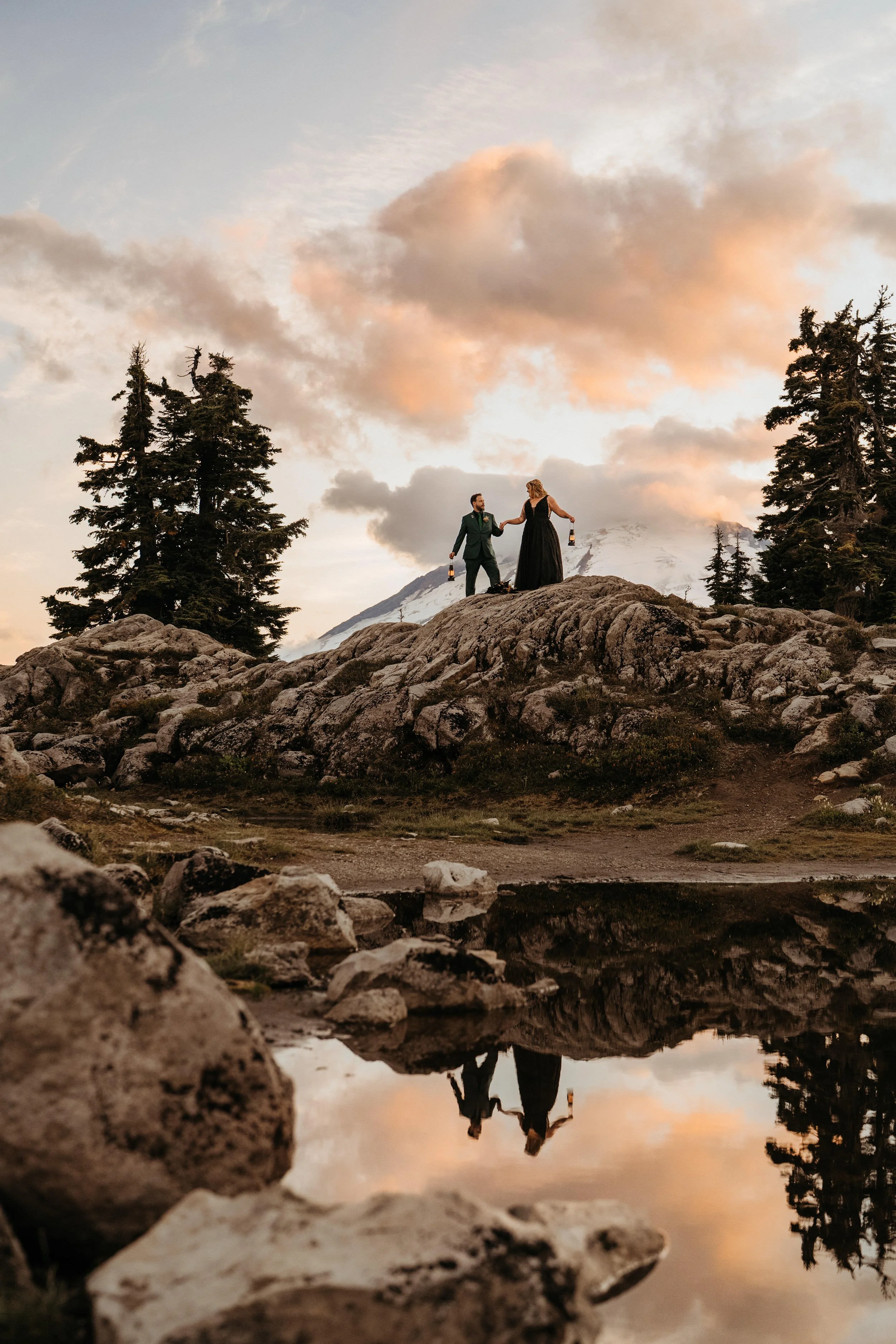
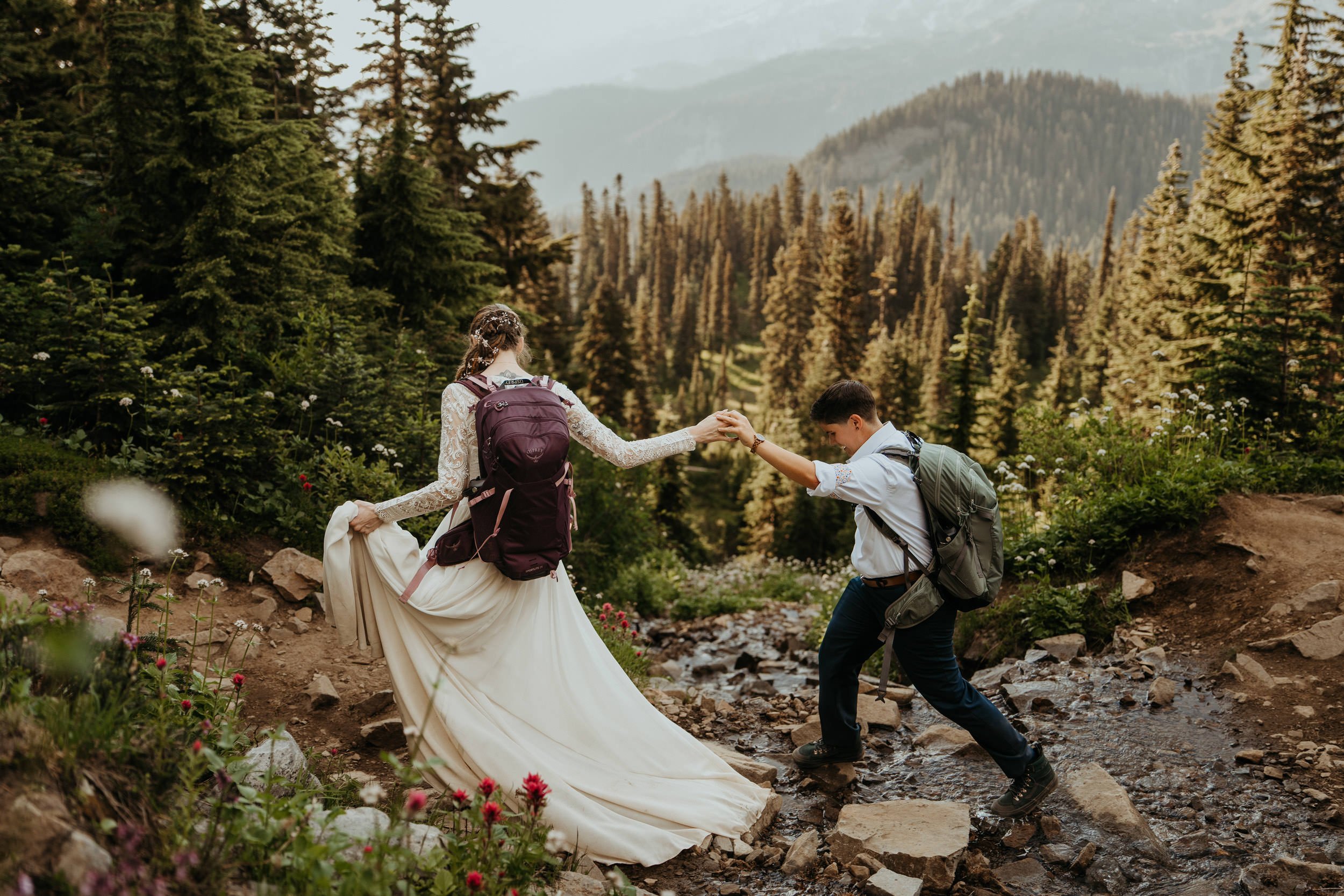
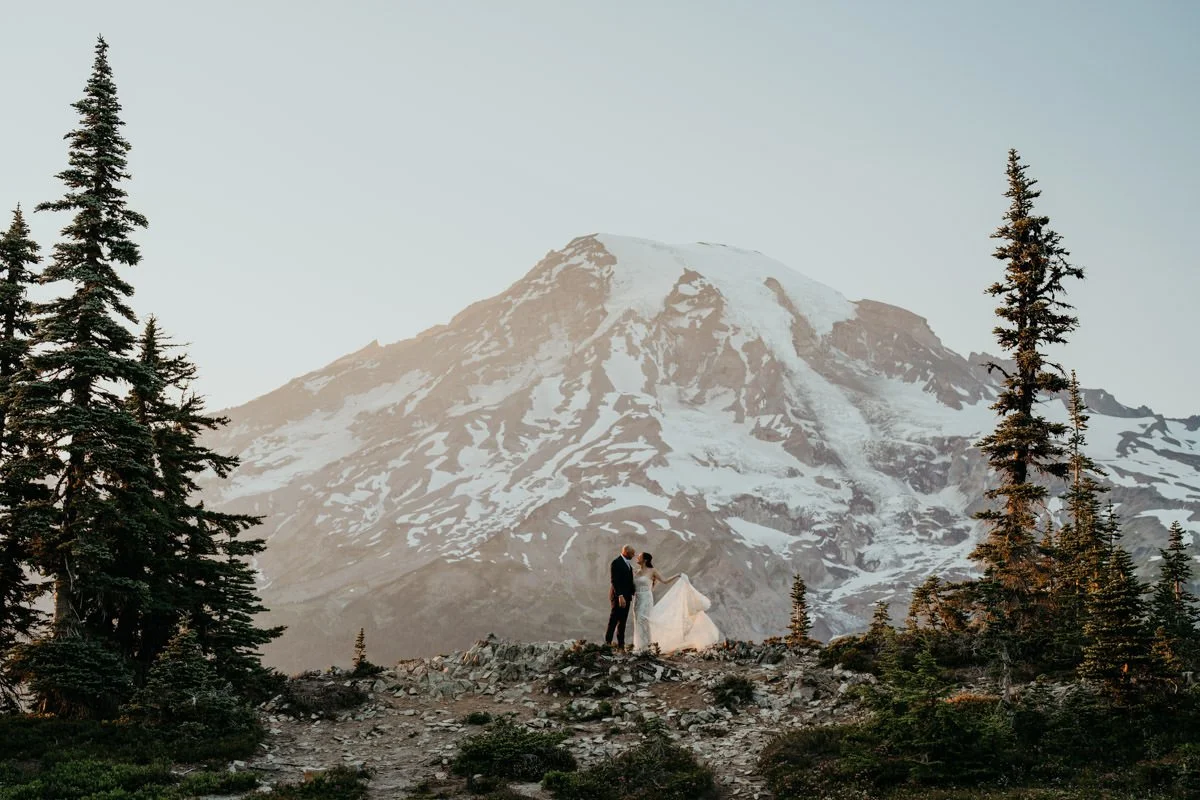
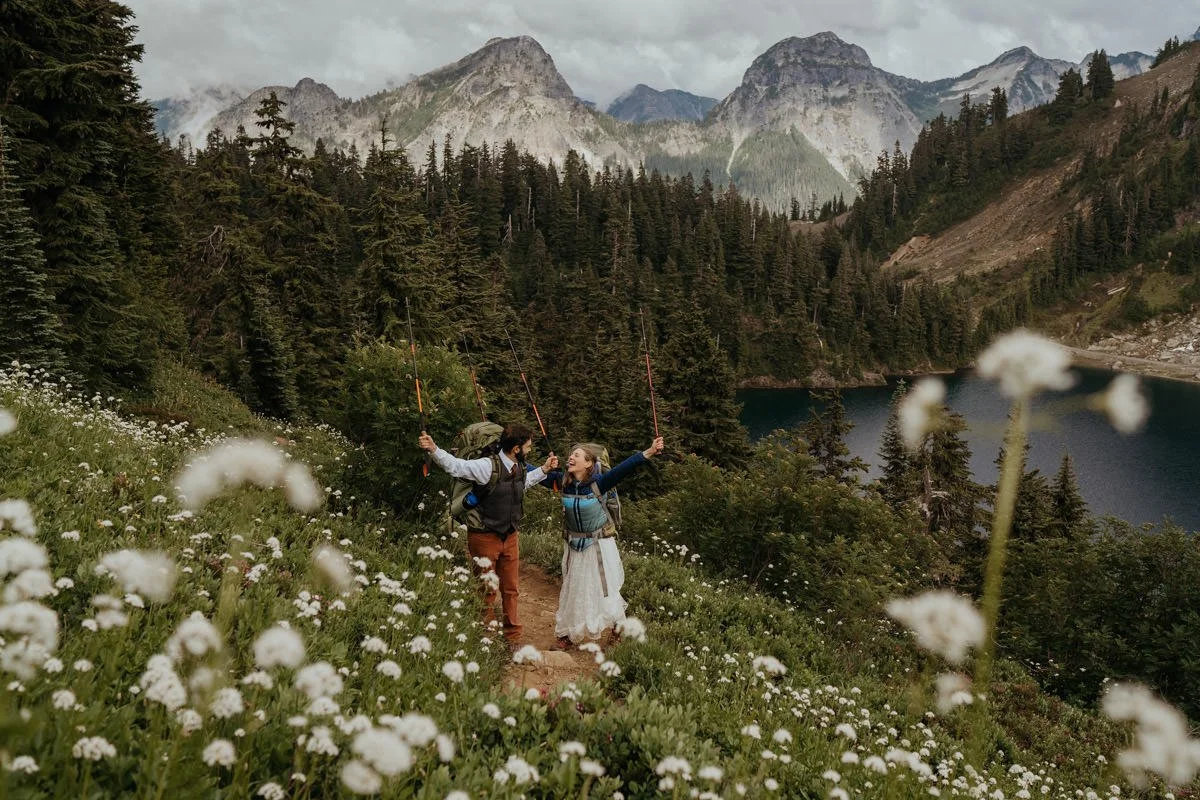
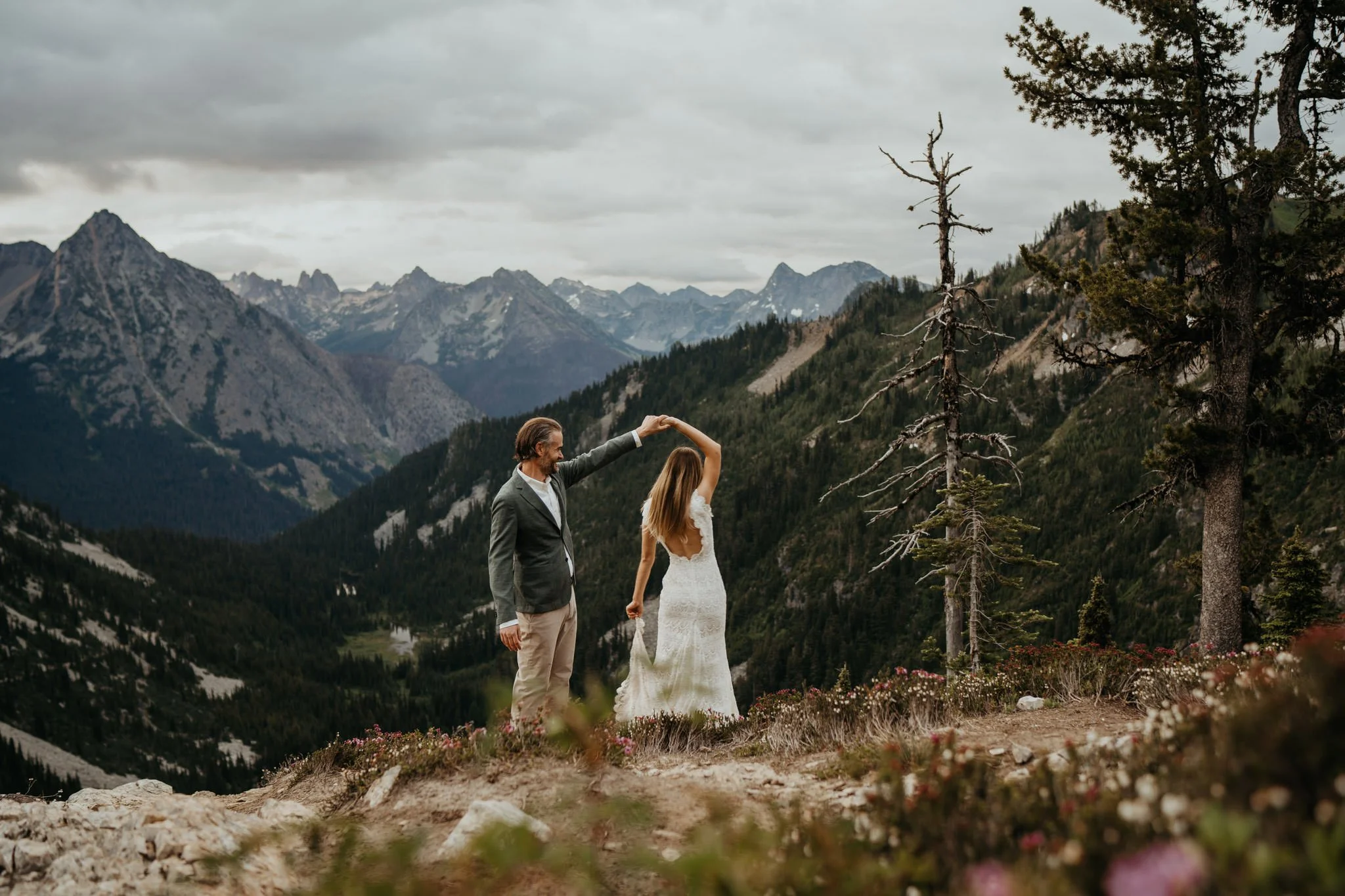
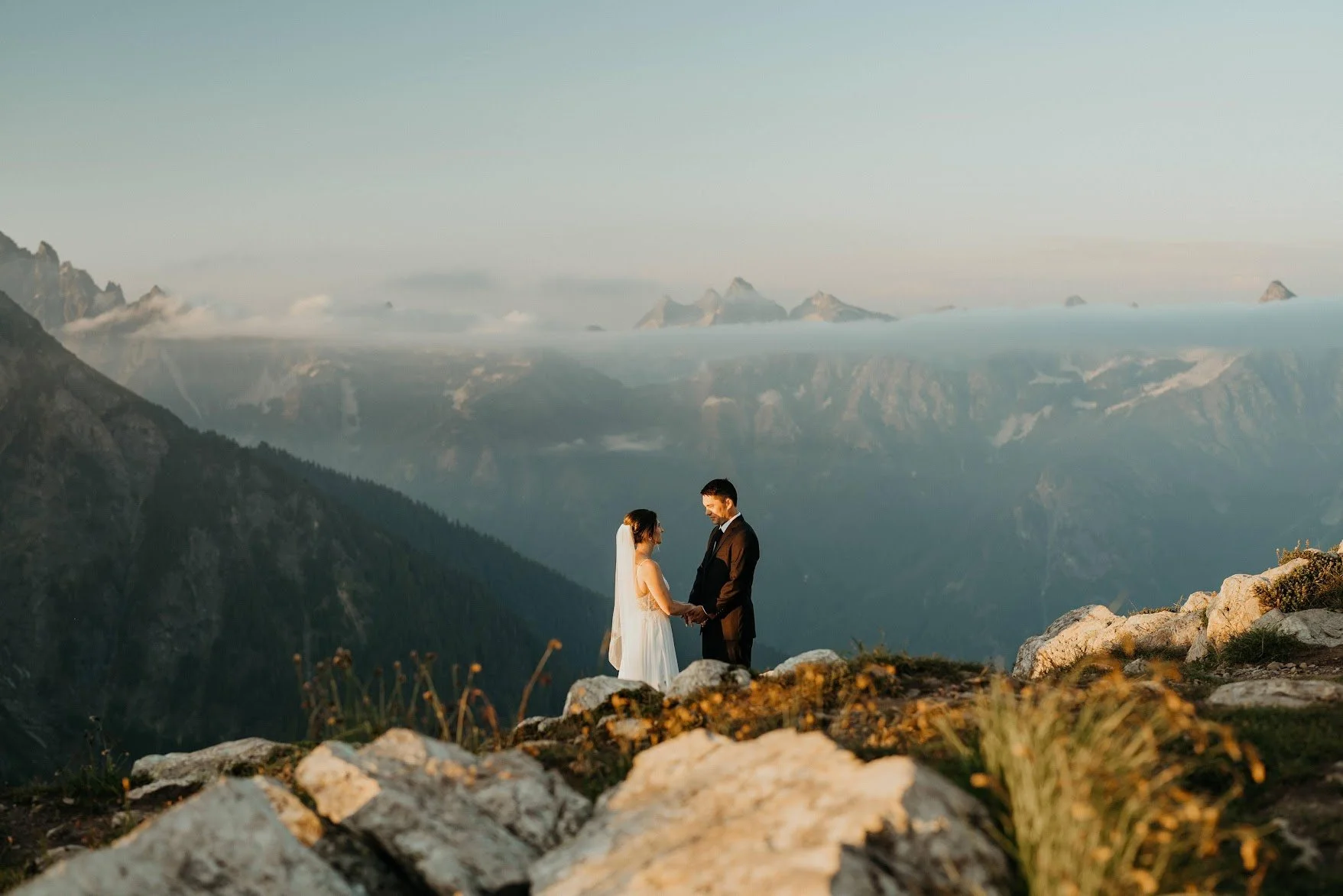
I’m not saying don’t elope in summer. In fact around 75% of the elopements we photograph occur between June and October. And it’s obvious why: the scenery is absolutely stunning! Wildflowers in bloom, alpine views for days, best chance of clear skies, and pretty much all the trails and roads are open so the variety of scenery you can get is unreal. Scenery like this:
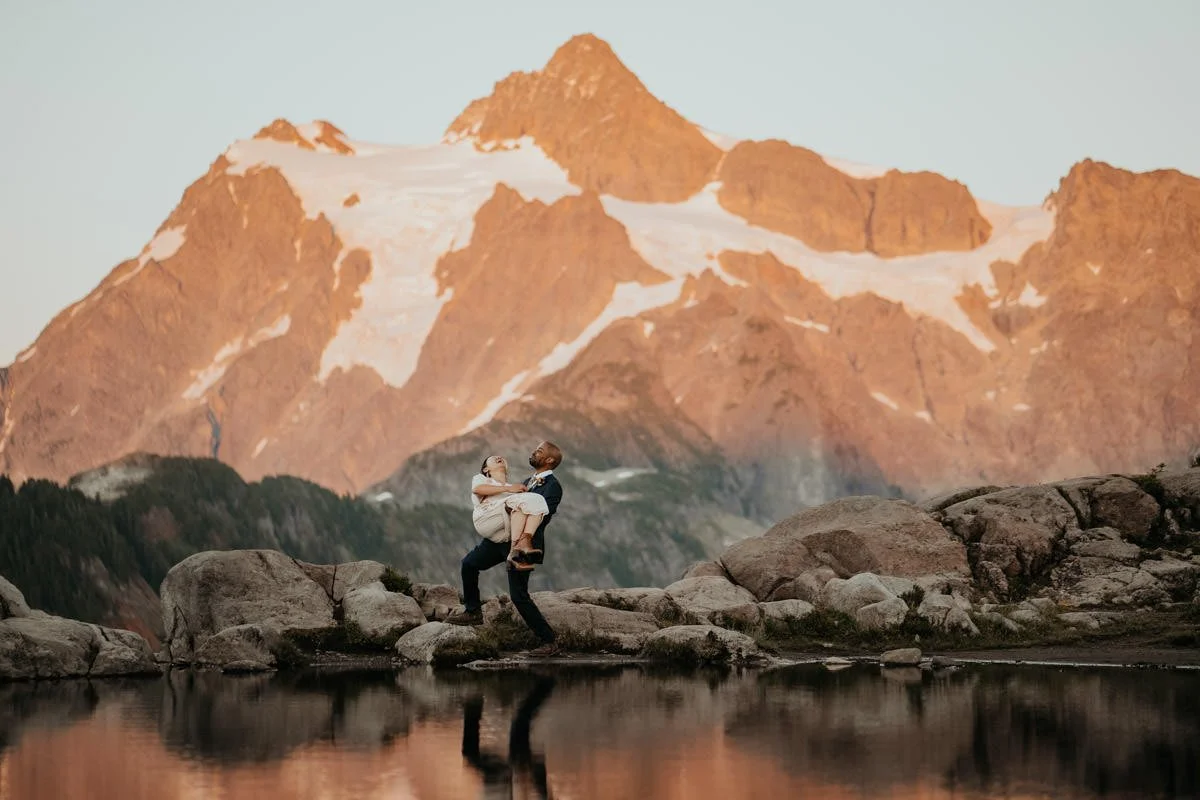
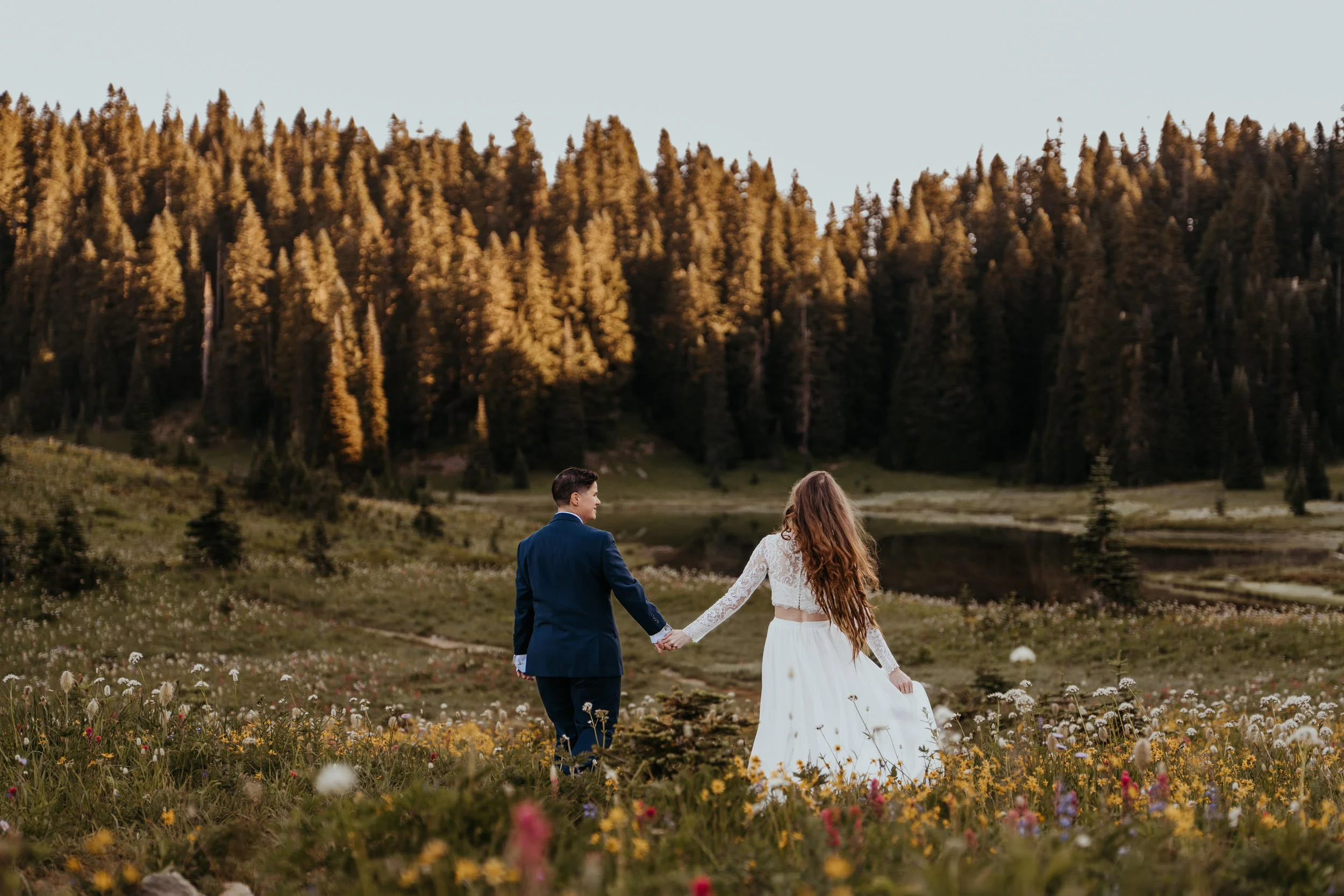
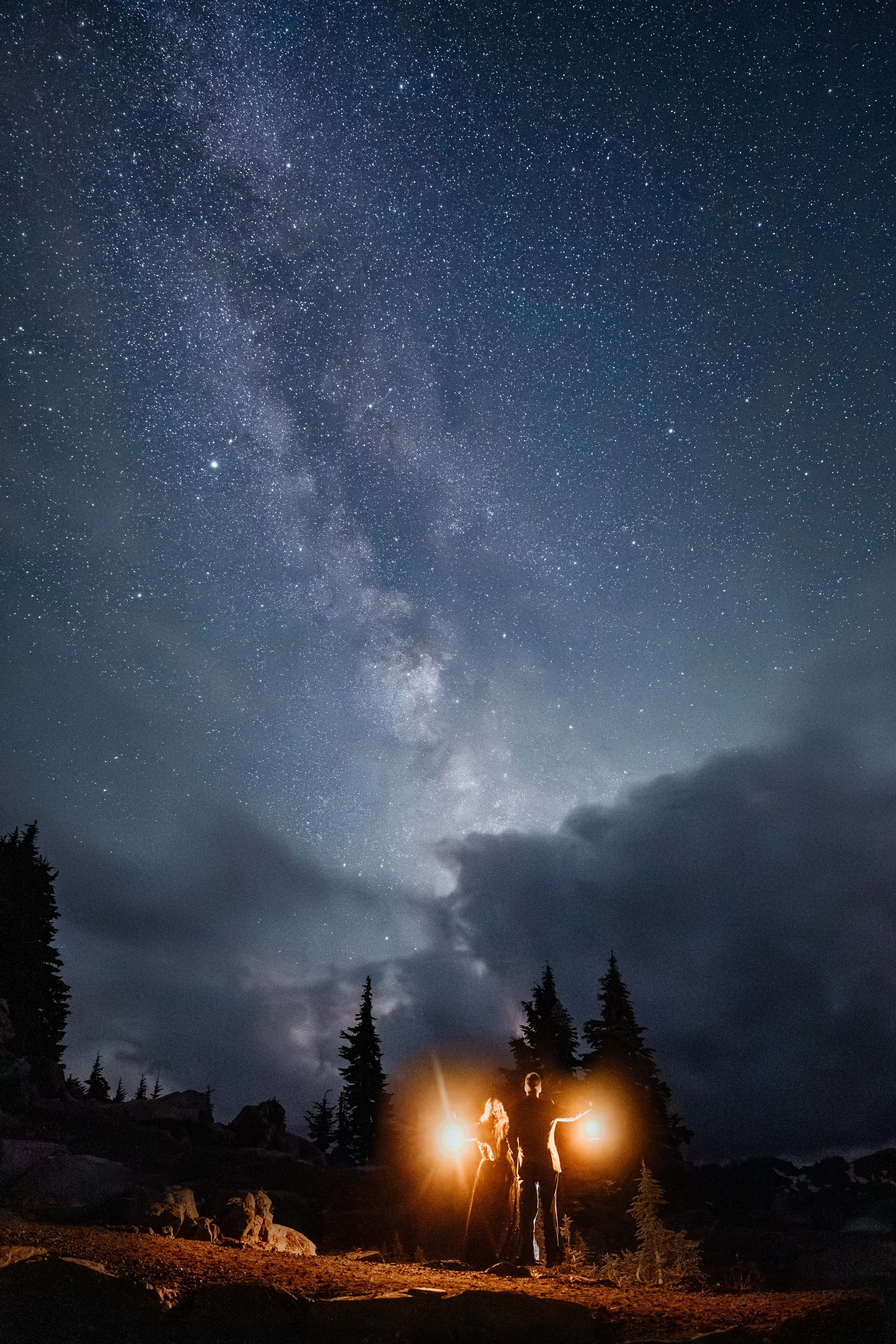
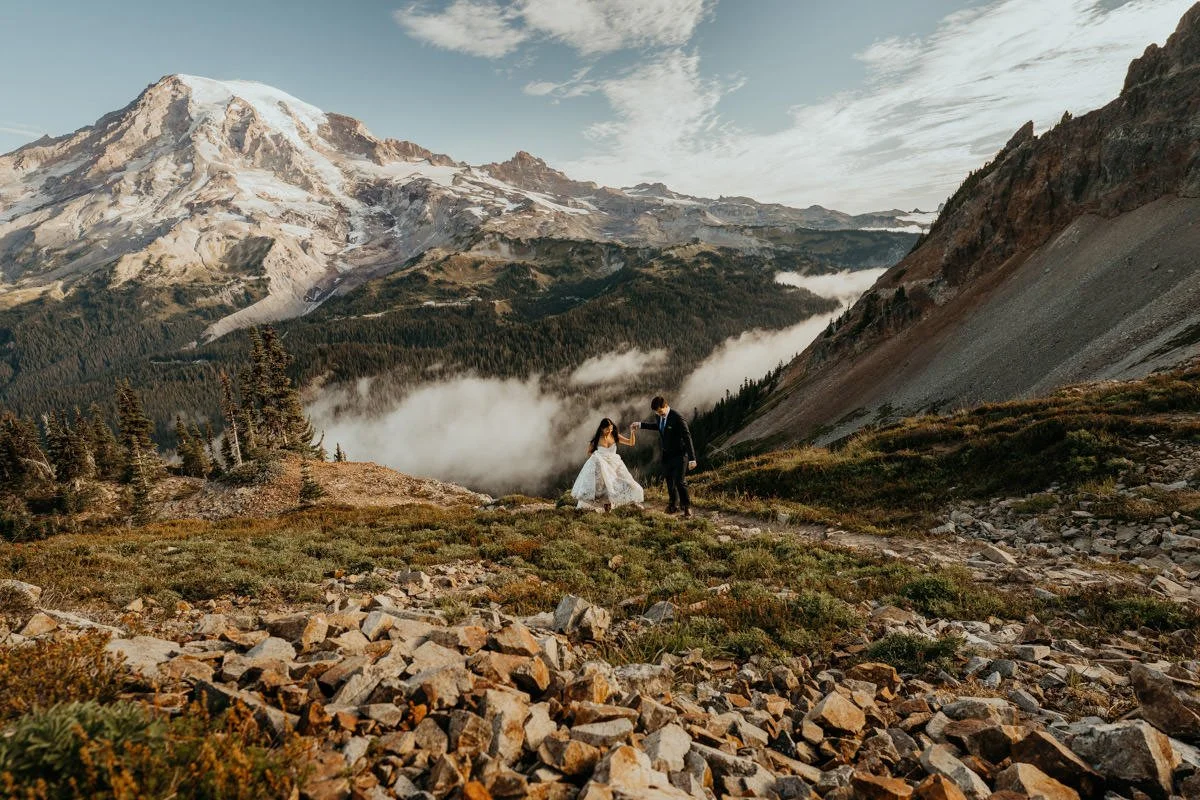
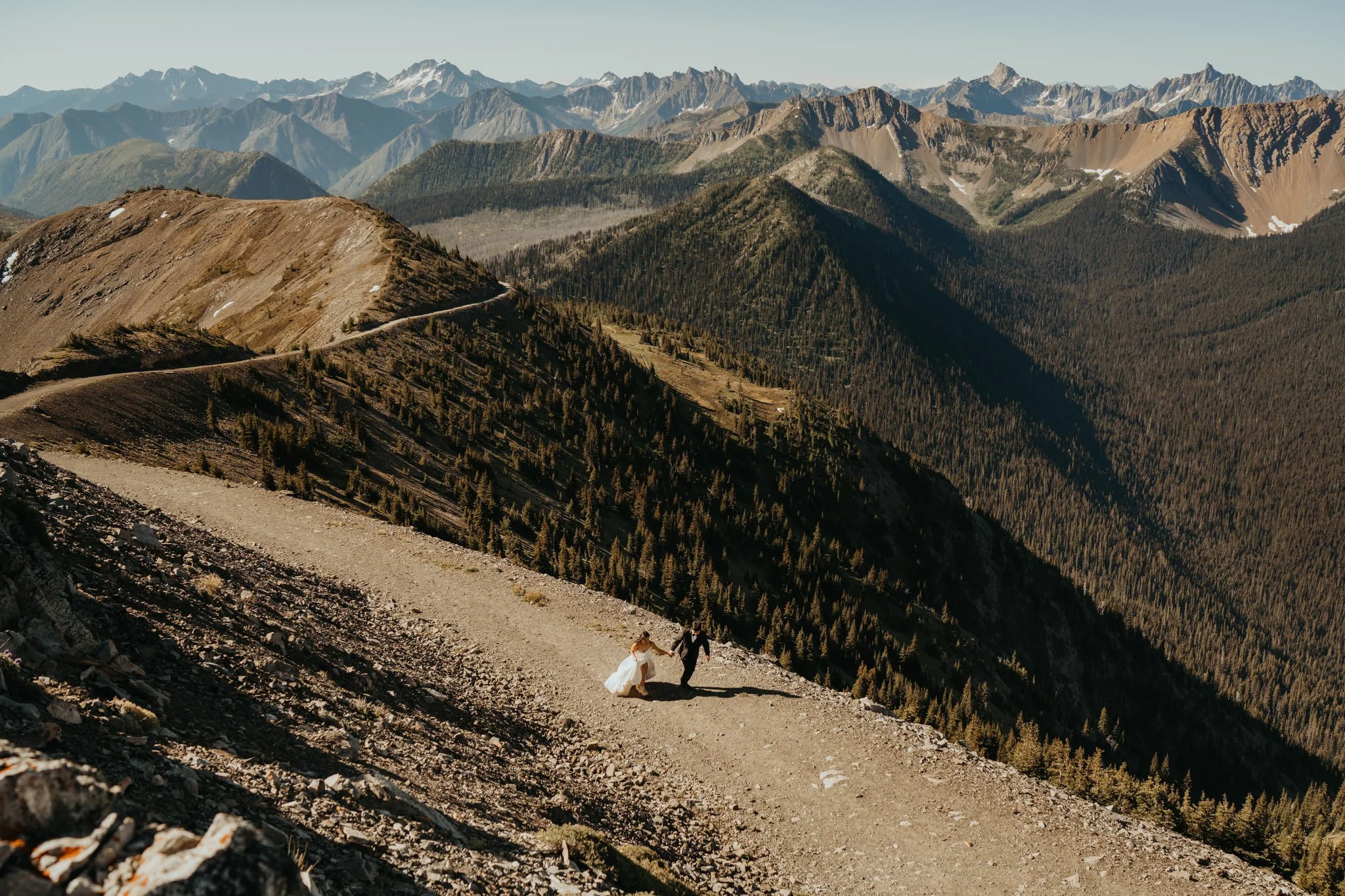
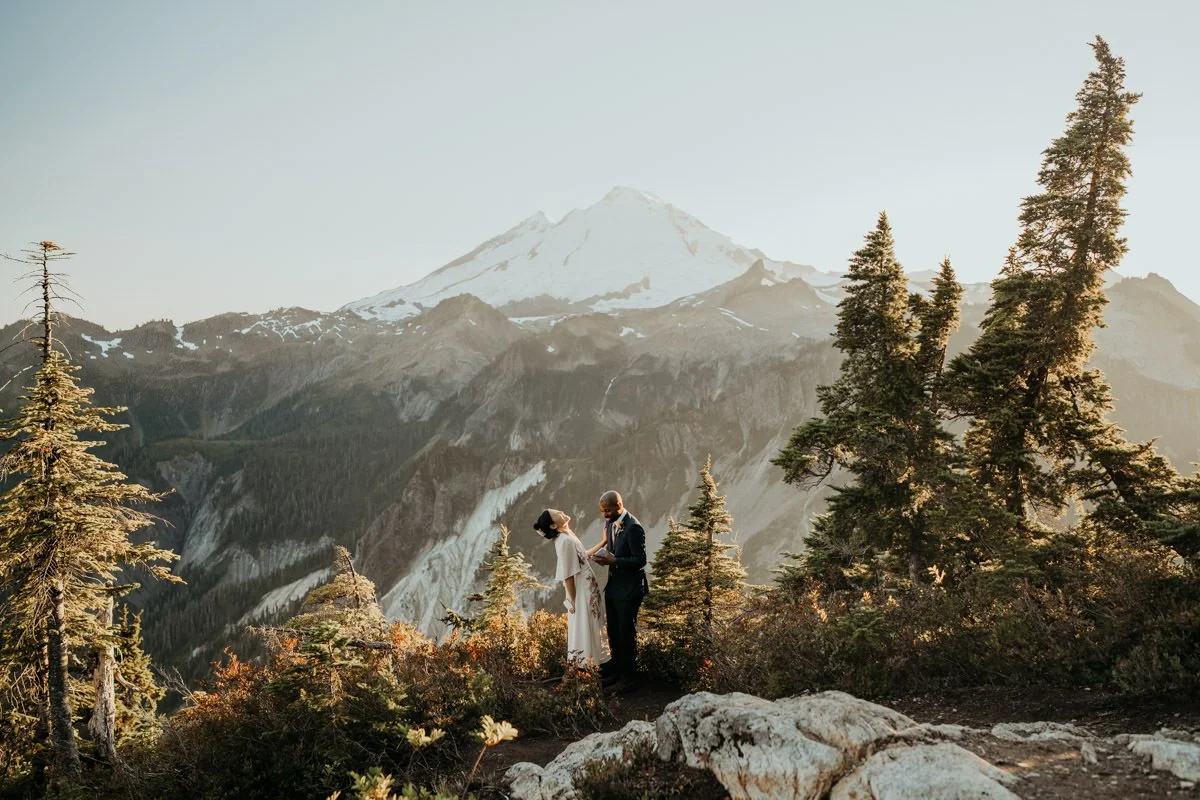
Okay, but how do we plan around that risk? The answers are flexibility and options.
How to Best Prepare + Stay Flexible
Always Have a Plan B (and C)
This is the most practical takeaway and the single best way to plan ahead for fire: have multiple sets of plans that you can refer to in case your top pick isn’t feasible.
For our couples, this is a key part of the planning support we provide, and it’s something we discuss at the start of the planning process, not just week-of. As we talk location ideas and the overall vision for your day—we will simultaneously be talking about contingencies. Plan B and C (sometimes D, E, F) are just as important to discuss as Plan A, especially as our climate changes.
Plan alternates in:
A different elevation band (high alpine → forest or coast)
A different region (North Cascades → Olympics)
A different ecosystem (mountain → beach → rainforest)
Locations that do not require permits — there might not be enough time to process a permit for a backup location
For Washington specifically:
Coast often has better air quality than east side, as the ocean breeze comes in off the Pacific
Western WA (Western Cascades + Olympic) generally fares better than Eastern WA during major inland fires (though not guaranteed)
On a poor air quality day, views in the forest tend to work better than expansive mountain vistas
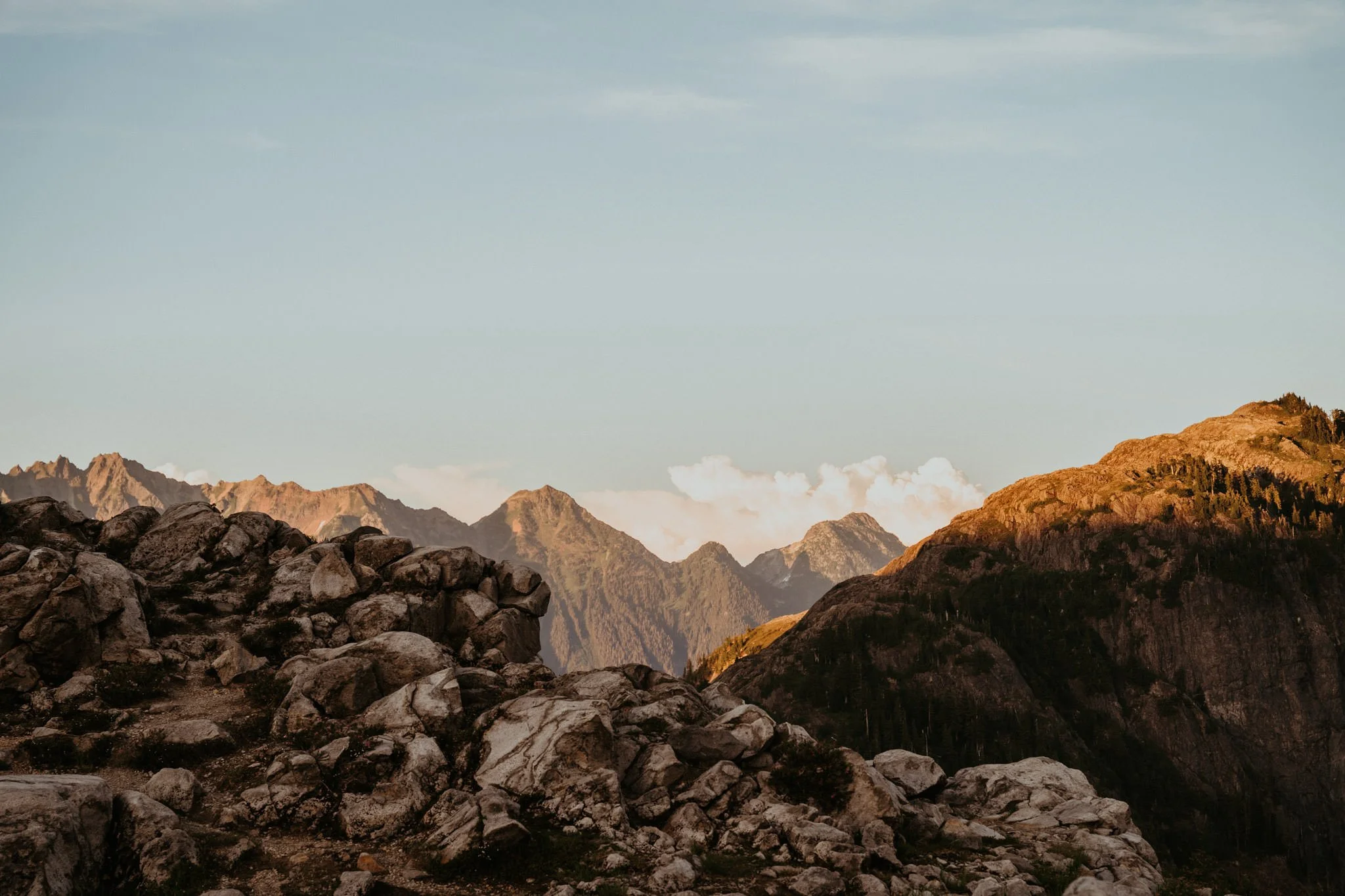
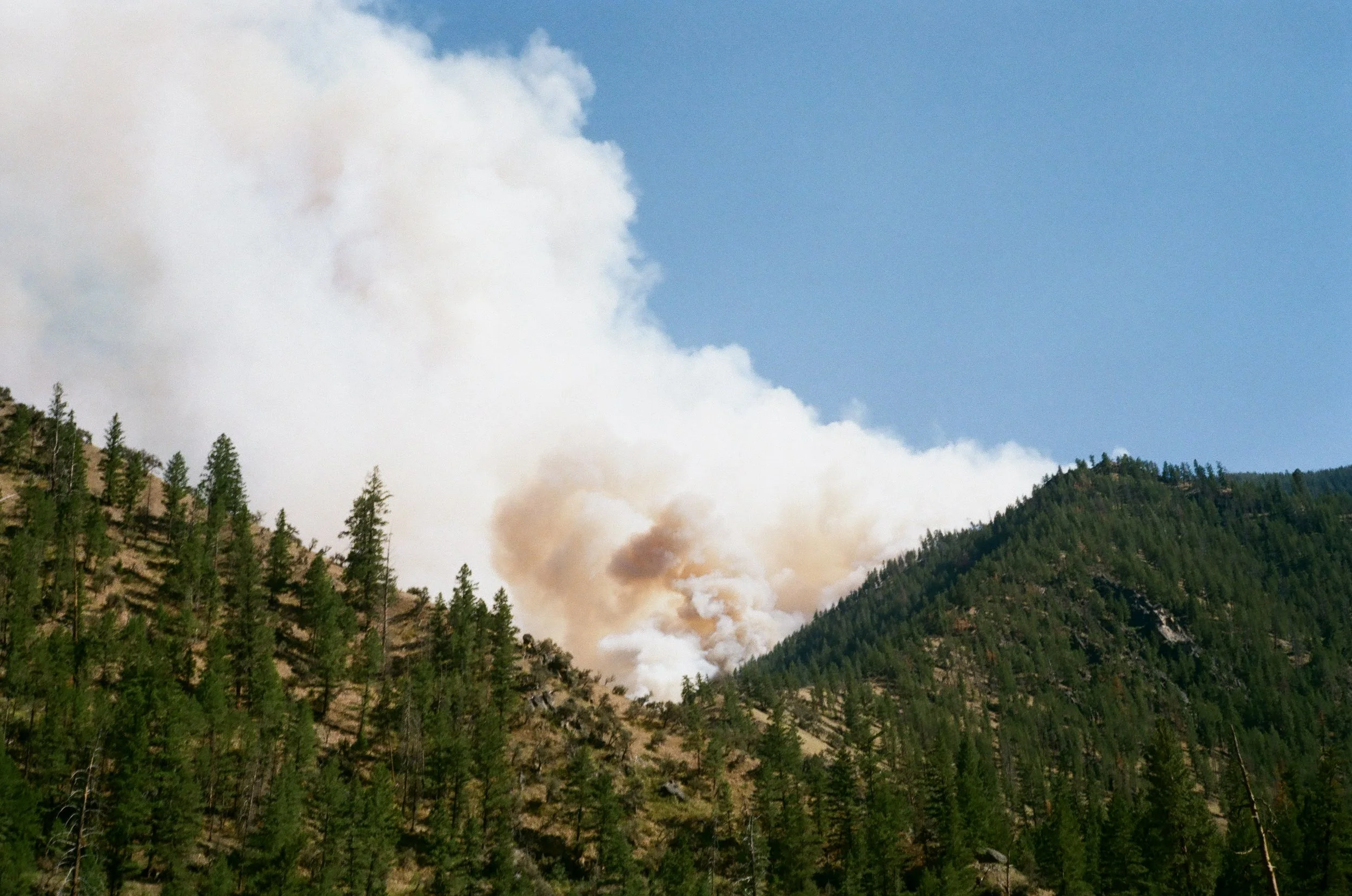
Wildfire spotted on this Artist Point elopement day, August 2021
A few real-world examples from our recent seasons, of how we’ve had to pivot around wildfire:
Mid-September 2025: A couple was hoping to elope at Lake Cushman, until the Bear Gulch Fire popped up. We picked a similar river/forest spot near the Leavenworth area instead—very similar feel, no permit required. It was a bit smoky from other fires that day, but we managed to hit a good window of weather. They told me later that they liked their Plan B even better than their original plans, especially since they got to experience Leavenworth.
Late August 2023: A couple was hoping to elope at Blue Lake, then the Blue Lake Fire popped up ~two weeks before their elopement. We switched to Artist Point near Mt. Baker—great views, similar alpine feel, less smoke, no permit required. Thankfully found a very cool Airbnb that was still available. You can see their day here!
Late September 2025: An elopement planned for the Tipsoo Lake area, though the Wildcat Fire impacted access to that spot. We provided a contingency plan around the Mt. Baker area, as well as alternate locations around the Tipsoo Lake area if conditions were suitable. Our photographer headed out a day early to scout and found an incredible ceremony site outside the park bounds.
A personal anecdote from September 2022: I had a cute getaway planned with my husband—we booked a little cabin for a weekend. We woke up the next morning to ash falling from the sky (see photo below). The Bolt Creek Fire had started less than ~5 miles from us—we had to evacuate. (If this were to happen on an elopement day, we would either drive to a totally different location if we had time, or we’d reschedule.)
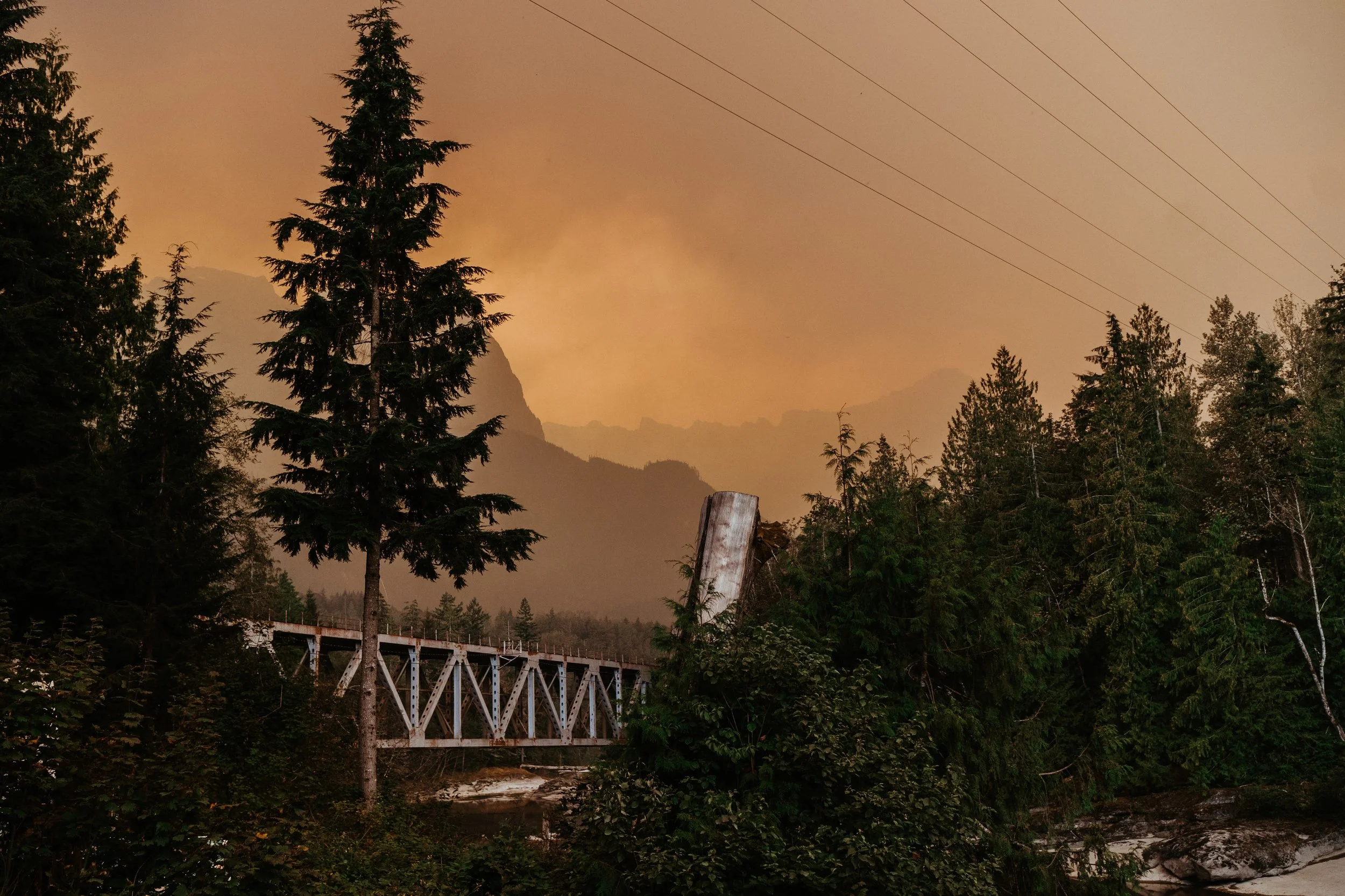
An eerie view from our cabin in Gold Bar, the morning of the Bolt Creek Fire.
Look for Lodging with Free Cancellation
This is one of the best ways to protect your plans—flexibility in accomodations, especially on short notice.
EVEN amid wildfire disasters, not all Airbnb hosts will offer refunds if you have to cancel—especially if it’s just an air quality advisory or the fire is far enough away from the property. Some rentals offer free cancellation up to a few days out—this is ideal.
A few tips on what to look for:
Check the host/listing rules for your needs
Message the host before booking if you plan on having a photographer there, or if you have any activities in mind (ceremony, group meal, reception, etc.)
Some rentals don’t allow events, photographers/commercial use or may have certain policies in place like photographer fees
Browse CozyCozy — this site searches Airbnb, VRBO, Booking.com, and other vacation rental sites simultaneously — a great place to start; you can filter by “flexible cancellation”
You can set a filter on Airbnb for “free cancellation”
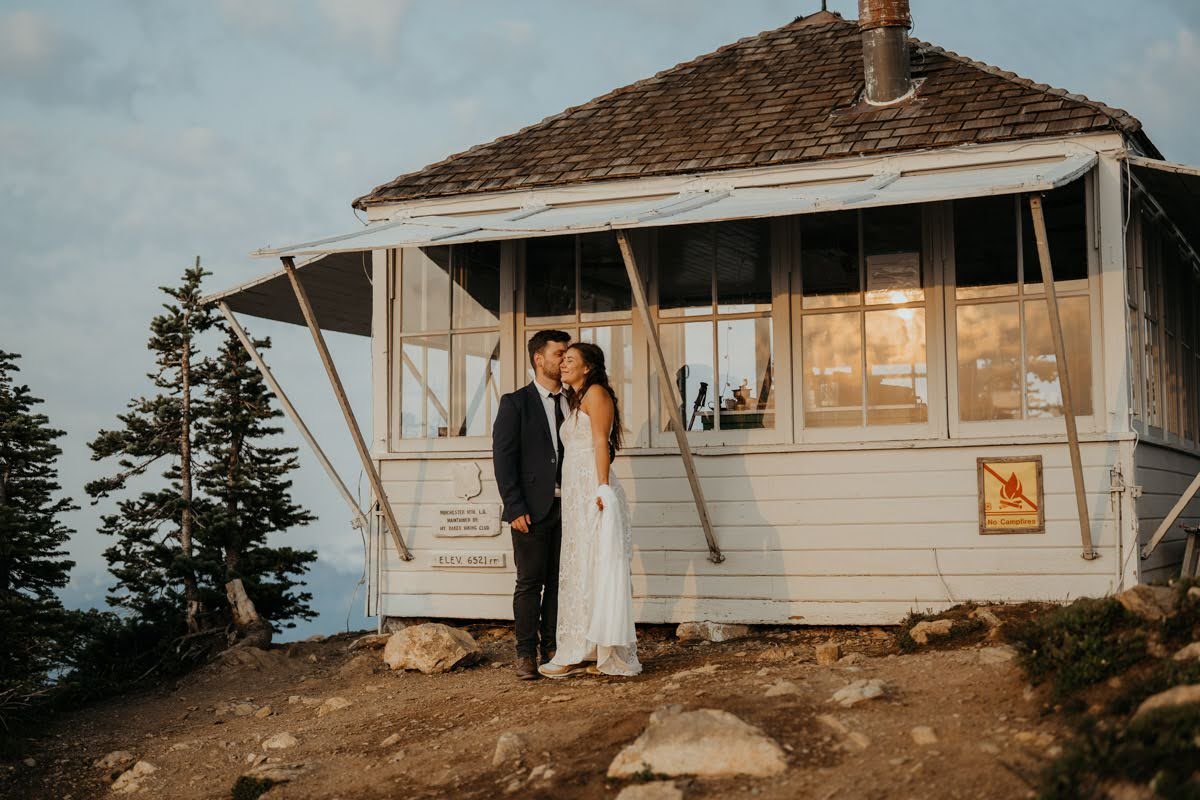
Backup Plans Around Permits
Option 1: Look for Alternates that Don’t Require Permits
If you need to pivot to a new location, especially last minute, there is not always time to apply for a new wedding/special use permit for your location.
If you have a Plan B spot in the same national park/forest, you can sometimes list this on your permit application. This is a great way to build backup plans into your plans. (For example, Mt. Rainier’s Tipsoo Lake could be your Plan A spot, then Ricksecker Overlook could be your plan B.)
But you also need to have a Plan C spot that is NOT in the same park/forest. It’s good to have at least one backup location that’s in a different part of the state, as wildfires and smoke can impact large areas. (For example, if planning for Mt. Rainier, consider somewhere on the Olympic peninsula as a backup. Or vice versa.)
Option 2: Apply for a Backup Permit
There might be cases in which it makes sense to apply for a second permit, especially if you have a lot of guests or other logistical needs.
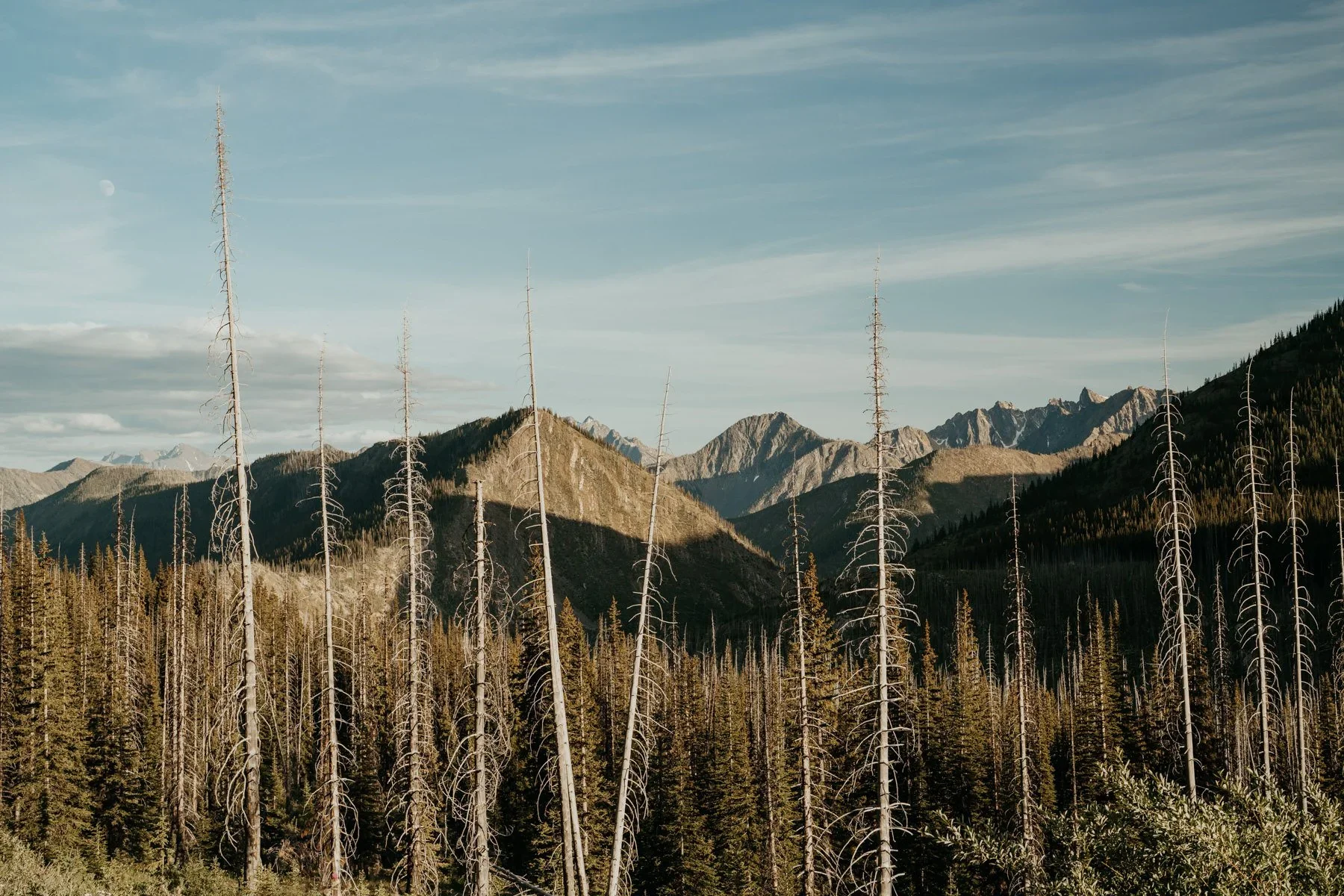
For Reference — Where Permits Are Needed vs. Not Required (In Washington State)
Depending on your location you may need a special use permit. On some permit applications, you can list your alternate/backup locations.
A quick permit overview for Washington (as of 2026):
Mt. Rainier National Park — permits required for ceremonies within park bounds (great backup for photo spots if you have a ceremony outside the park)
Olympic National Park — permits required for parties 5+; not required for 4 or less (great backup spot for “just us” elopements)
North Cascades National Park — permits required
Washington National Forests (Mt. Baker-Snoqualmie, Okanogan-Wenatchee, Gifford Pinchot, Olympic NF to name a few) — permits usually not required for groups <75
Washington State Parks — permits required
If it’s just you two, Olympic National Park or any of Washington’s National Forests are our go-to’s for solid backup planning.
If you are inviting guests, we look to the National Forests as they do not (typically) require permits for group ceremonies.
Make Your Planning Easier: Simplify
Not strictly specific to wildfire, but in general, the less complexity in your plans, the easier it is to be flexible.
Complexity comes in when you have:
Guests — travel + accommodations, communication (pivoting day-of can be difficult, especially in areas with no cell service)
Lots of vendors — hair and makeup artist, private chef, musician, decorator, officiant — all lovely additions but all people who need to updated if plans changed; especially if you have to switch to a totally different part of the state
Lots of decorations and details — the more stuff, the more hassle. Keep the details simple and lightweight for maximum flexibility and ease day-of, especially if timing is impacted by backup plans and you’re running behind.
Or… Skip Fire Season Entirely
To avoid 90% of this logistical stress or uncertainty… consider eloping outside of fire season. I truly adore the cooler, slower months, late October thru May and honestly believe they are very overlooked and underrated!
You may not have the same peak access to high alpine areas, at least free of snow or blooming with wildflowers, but there are plenty of great scenic options to consider for the off-season. Plus, the weather is cooler, the trails are quieter, and everything feels more intimate.
Consider off-peak places and vibes like:
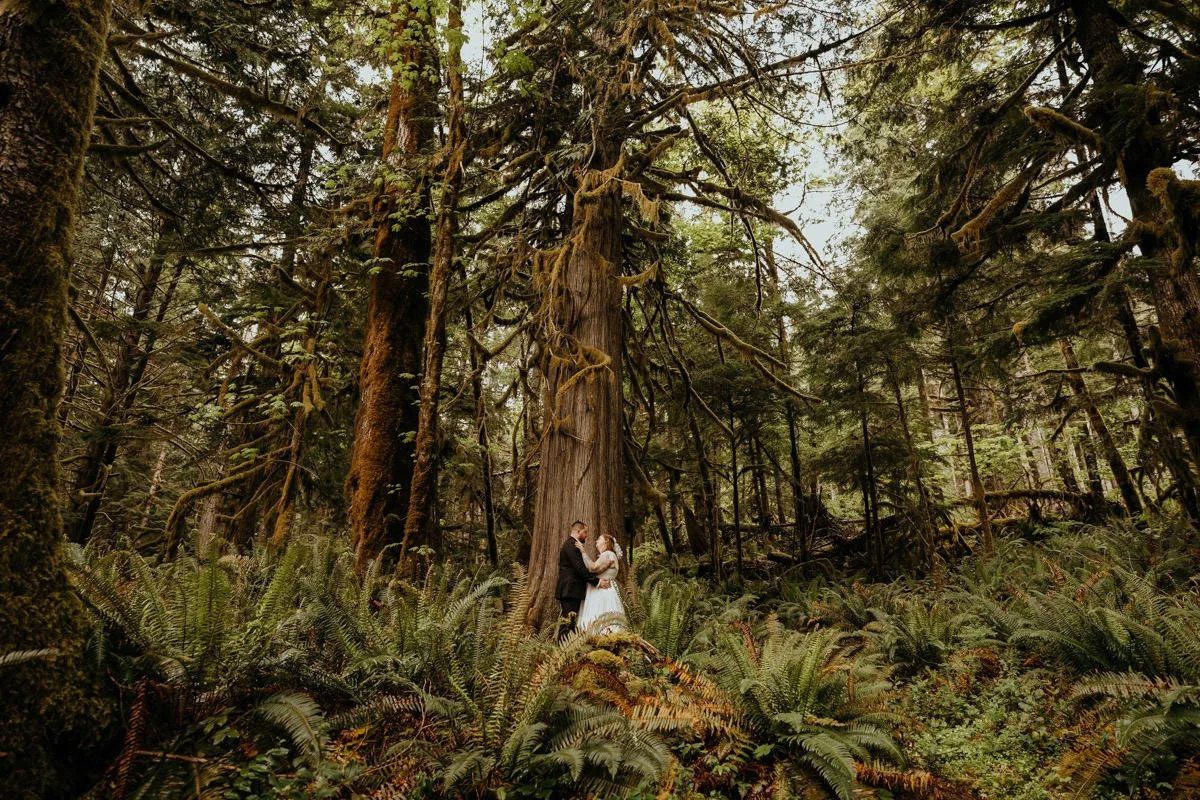
Forests — this is the Evergreen state, after all! Our forests are most lush in spring
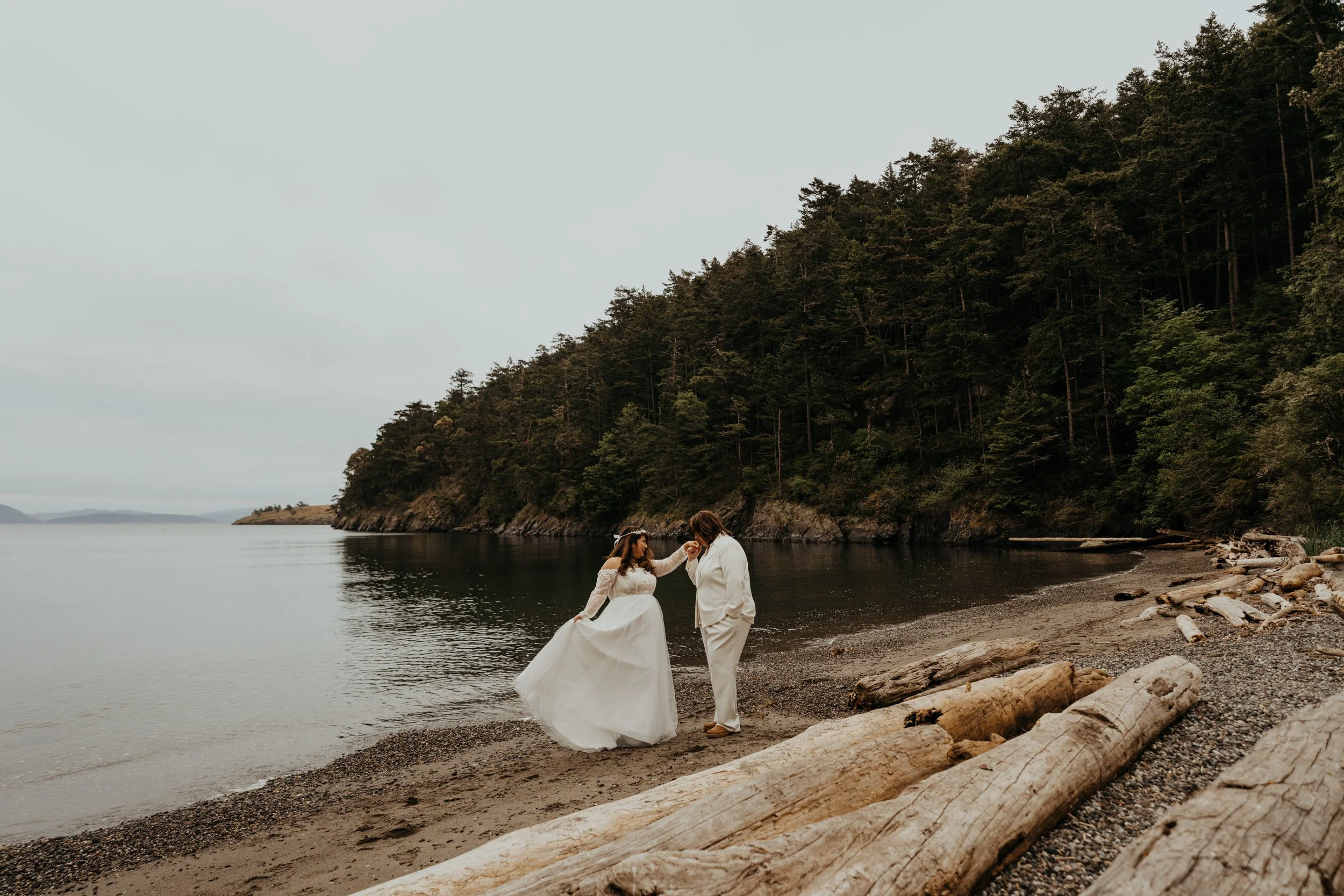
Beaches — year round access to some of the most scenic coastlines in America
Waterfalls — spring is the best time for waterfalls, especially near Olympic + Mt. Rainier
Lakes & rivers — we have some lovely year-round spots that offer incredible lake views, honestly sometimes even better when they are less crowded and have that classic moody PNW weather
Low elevation mountains / mountain views — there are some spots that are lower in elevation that offer year-round mountain access, ask us for our best year-round mountain spots
Snowy mountains — there are some wintry alpine spots that you can access, especially if you love to snowshoe, ski, or board
Cozy cabin elopements — keep it low-key and rent a beautiful cabin with a view
A few off-season galleries, to get a sense of what’s possible outside peak summer season:
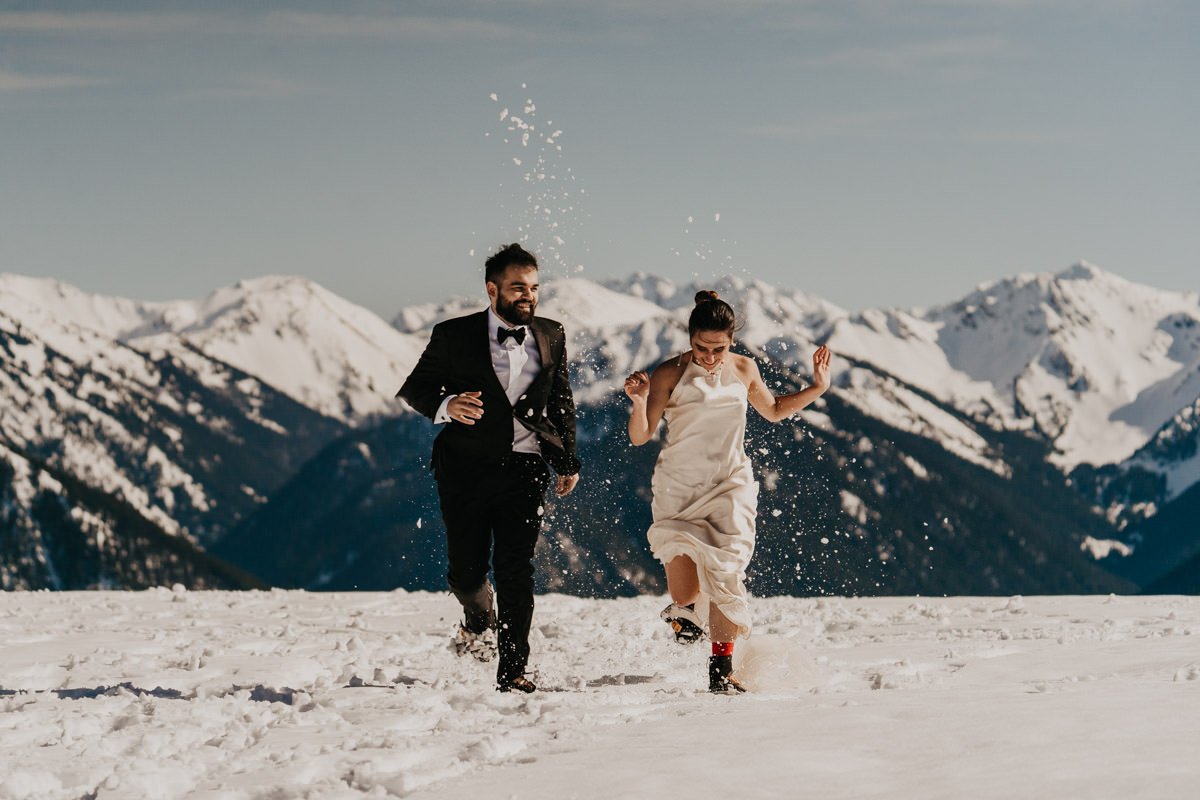
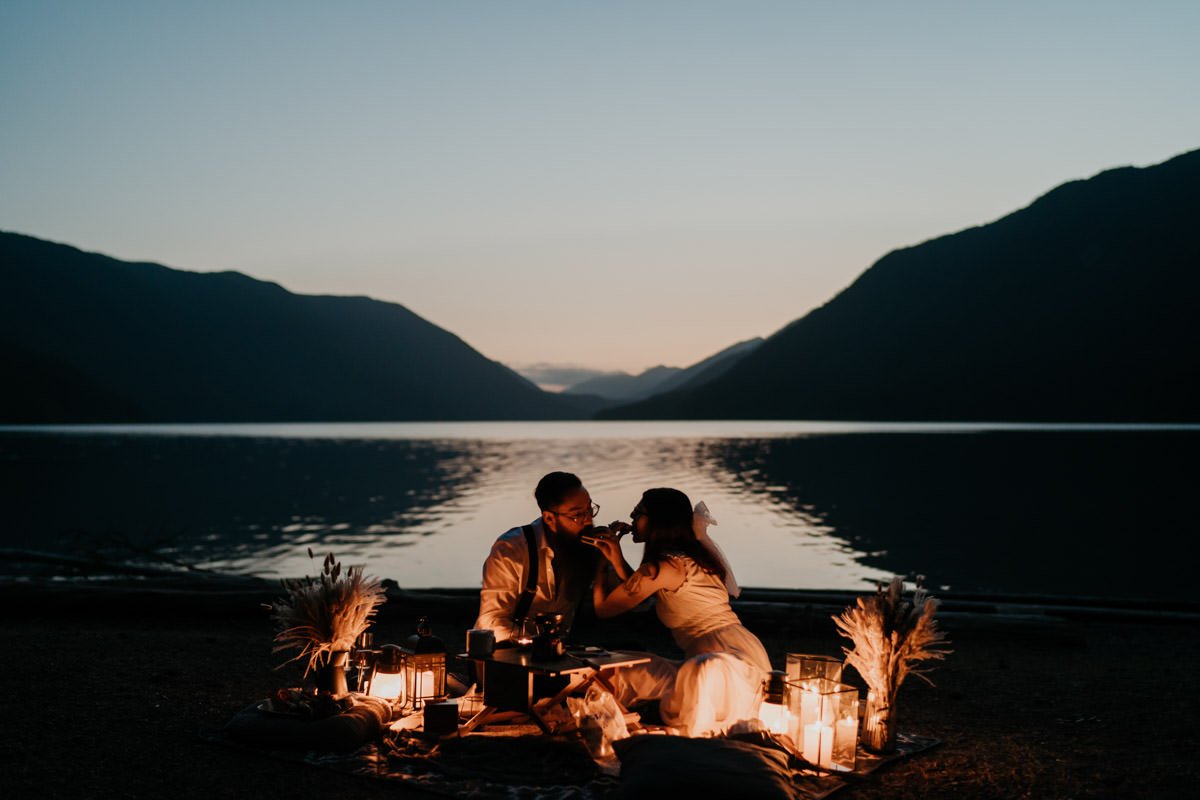

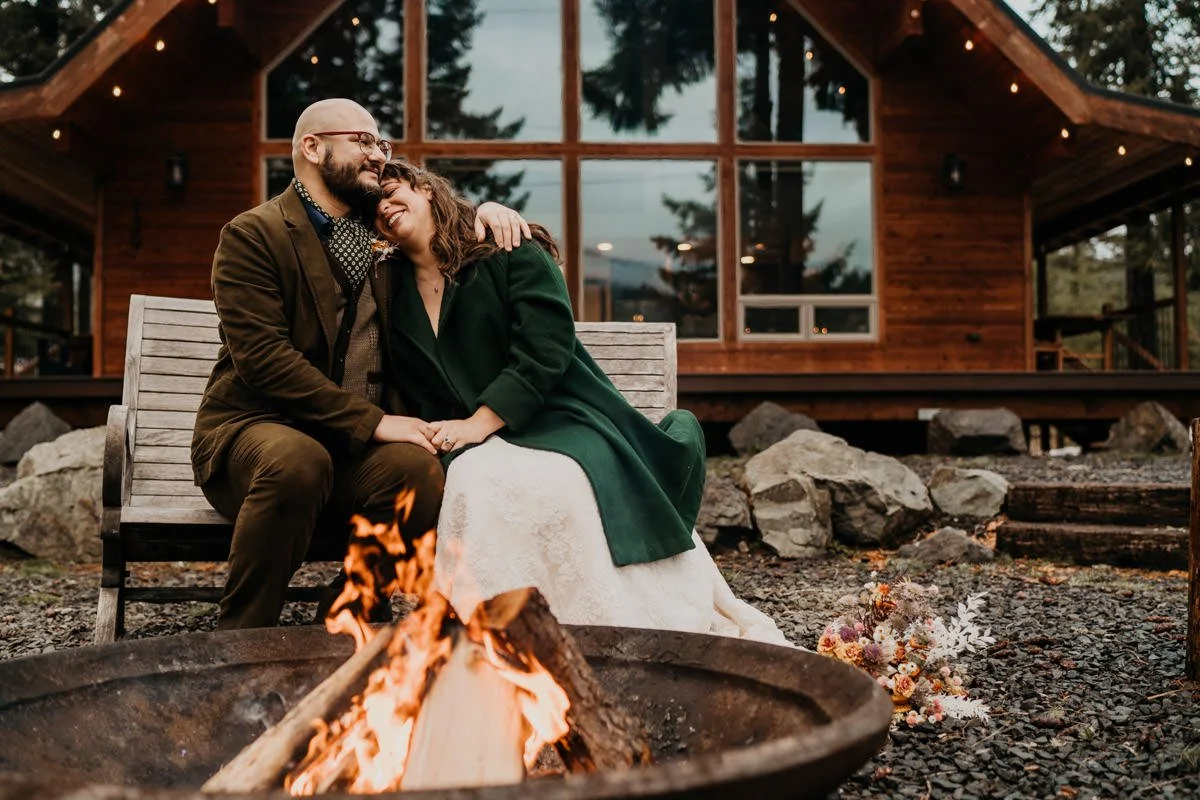


Understand Safe Conditions
A little smoke on the horizon can honestly make a sunset even more beautiful. But there’s a difference between “a little haze” and smoke that’s hazardous to your health.
Along with air quality, another factor is physical exertion and elevation—both increase how hard your lungs have to work. Most adventure elopements involve some level of both.
But how do you know what’s safe or what’s dangerous? You can’t always tell by looking or checking cams. The best way to tell is by checking the Air Quality Index (AQI) via a site like IQAir. Here’s a quick overview of what is considered safe or unsafe for an adventure elopement (these are slightly different than everyday activities):
0-50 — Good, little to no risk
51-100 — Moderate, acceptable, but can be risky for people highly sensitive* to air pollution
101-150 — Unhealthy for sensitive groups, not ideal for strenuous hikes or higher elevations; sensitive groups should avoid prolonged exertion
What to do: consider a non-strenuous alternative or a location with better AQI
151-200 — Unhealthy; not appropriate for strenuous hiking or prolonged outdoor activity
What to do: limit to accessible locations with minimal exertion, shorten exposure time, or better yet, pivot to a clearer region.
>200 — Very unhealthy to hazardous
What to do: Do not hike. Relocate, reschedule, or move indoors with filtered air.
If you’re already out: Retreat - get back inside; stay indoors if you’re already in it.
Sensitive groups — asthma, pregnancy, elderly guests, pets
(Source: airnow.gov)
Apps to Install on Your Phone Right Now
This is not an ad—this post is not sponsored. These are crucial safety tools I use for planning and photographing elopements—but in this current climate, anyone who lives or travels in any fire-prone region (like, all of western US) should have these apps on their phones as it could mean the difference between life or death.
An AQI tracking app — IQAir is the one I use (also works in browser); AirNow is another
Watch Duty — track active wildfires, fire cams, real-time alerts and evacuation info (also works in browser)
Set your Mental Expectations
Along with building flexibility into your plans and timelines, it’s good to set your mental expectations too—about what your experience might be like and how your photos might turn out.
This goes for more than just wildfire, too—this is about any kind of weather. When you’re planning an adventure elopement anywhere in the world, I encourage you to keep an open mind and not get too attached to a single view, photo, trail, kind of weather, or place to stay.
The atmosphere of your day is impossible to predict. Smoke, sun, rain, fog, snow, hail, gusty winds—whatever your day brings, this isn’t something that can be predicted when throwing a dart at the calendar a year in advance.
A little smoke can sometimes enhance the views. Hazy skies turn gold around sunset and it’s honestly quite beatiful. Alternatively, it can flatten the colors completely and make everything feel dull, or give strange color-casts to your photos. (…Along with being unsafe.)
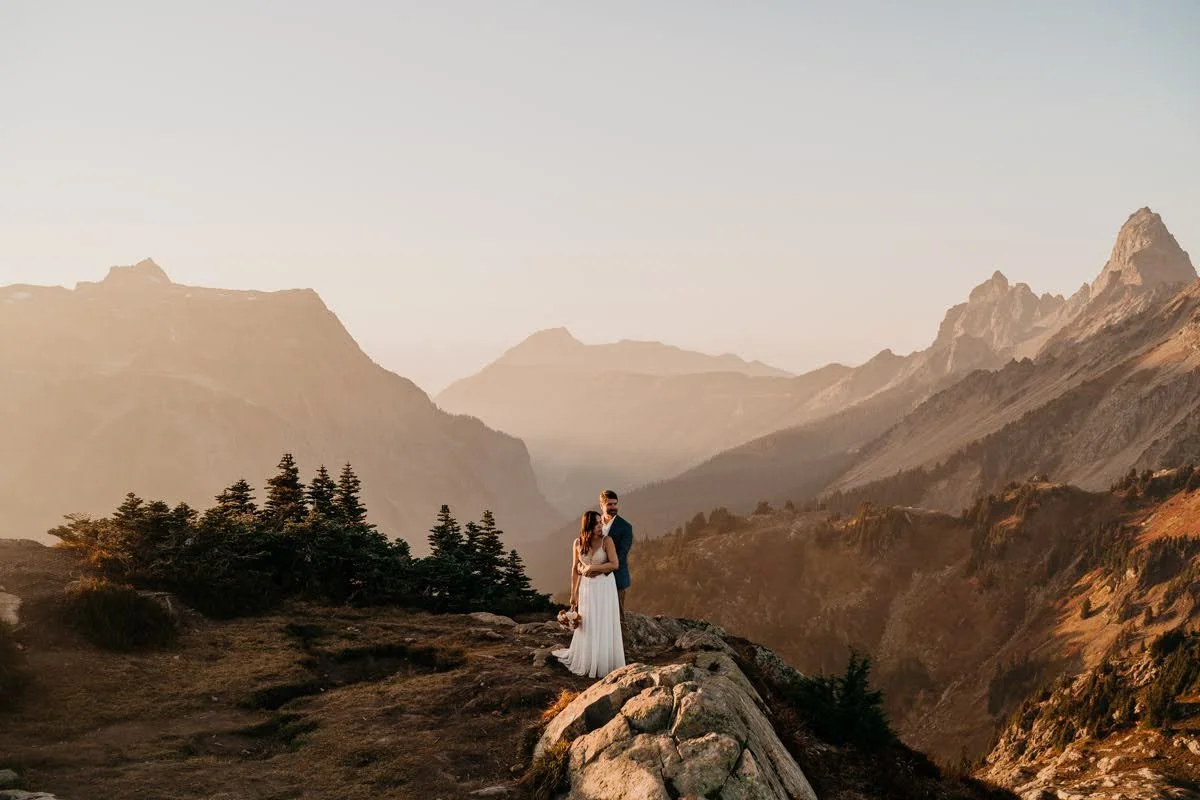
Smoky sunset haze during this early October elopement (safe AQI day to hike in the Cascades)
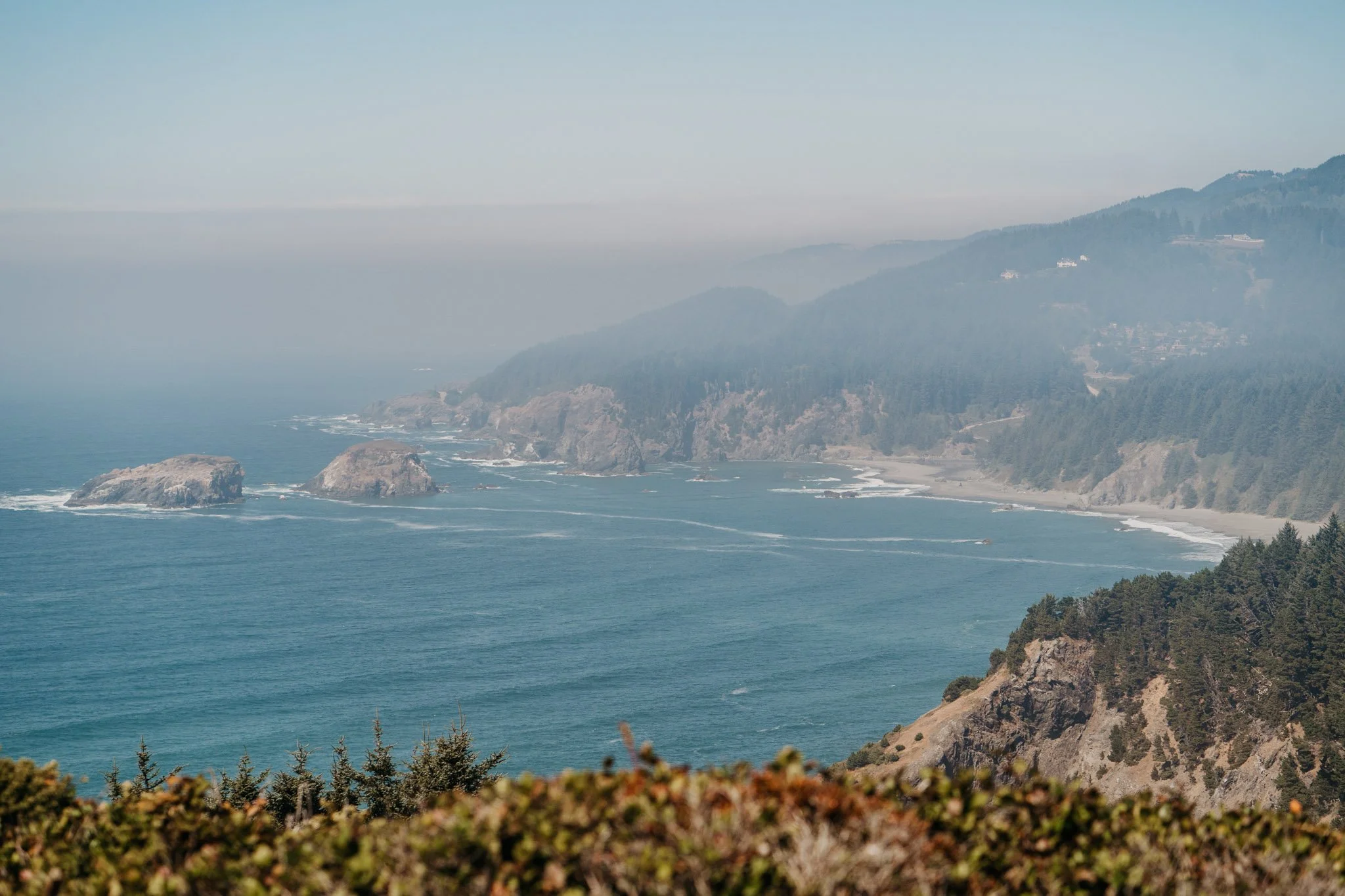
Smoke on the horizon flattened the tones and dulled the colors of this landscape during this Oregon Coast elopement
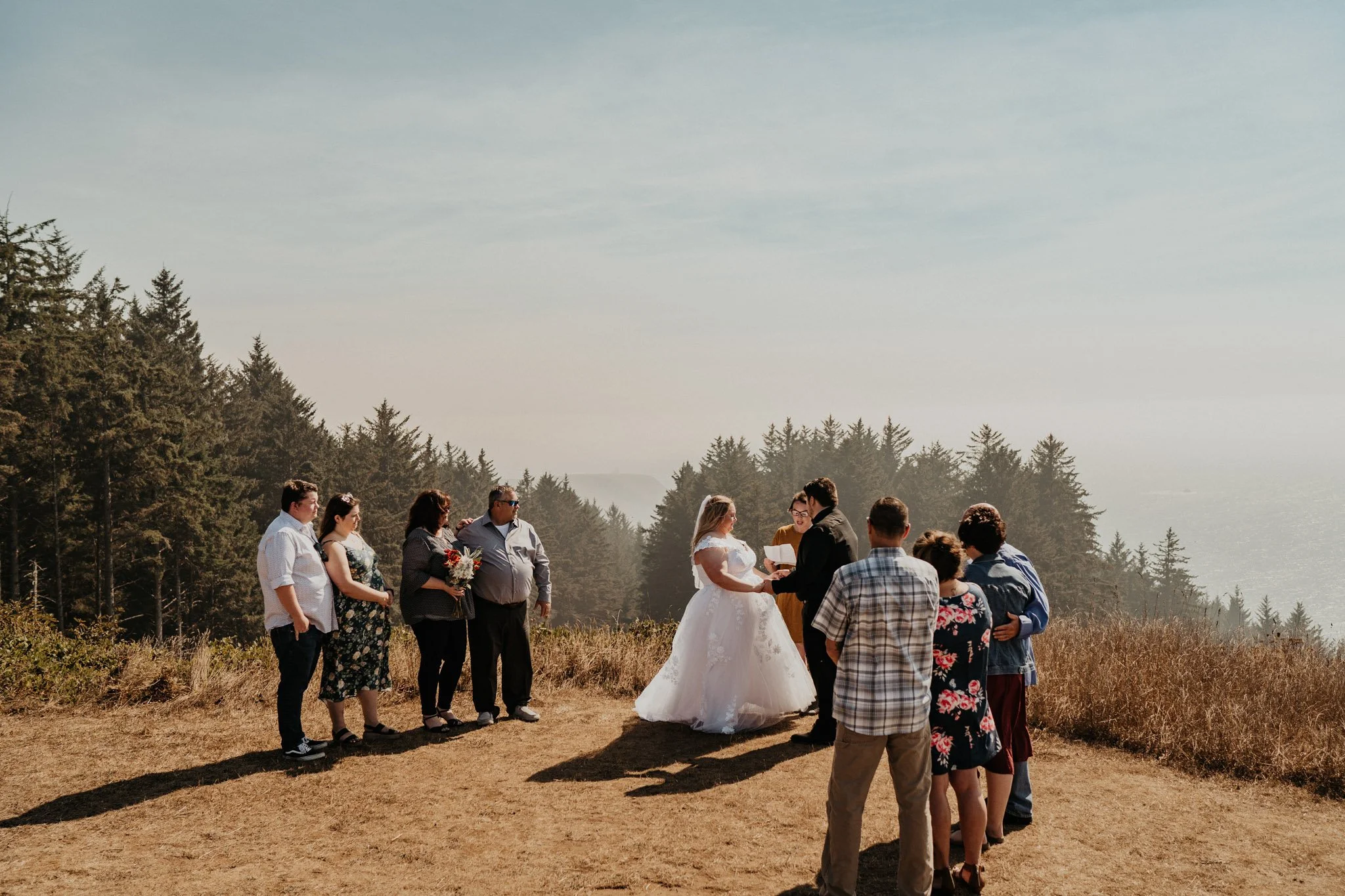
Smoke and haze obstructed the backdrop of this ceremony along the Oregon Coast—we could barely see the ocean below at this beach overlook. So I leaned into the contrast of them against the trees to make them stand out, and focused on how bright and airy the scene became.
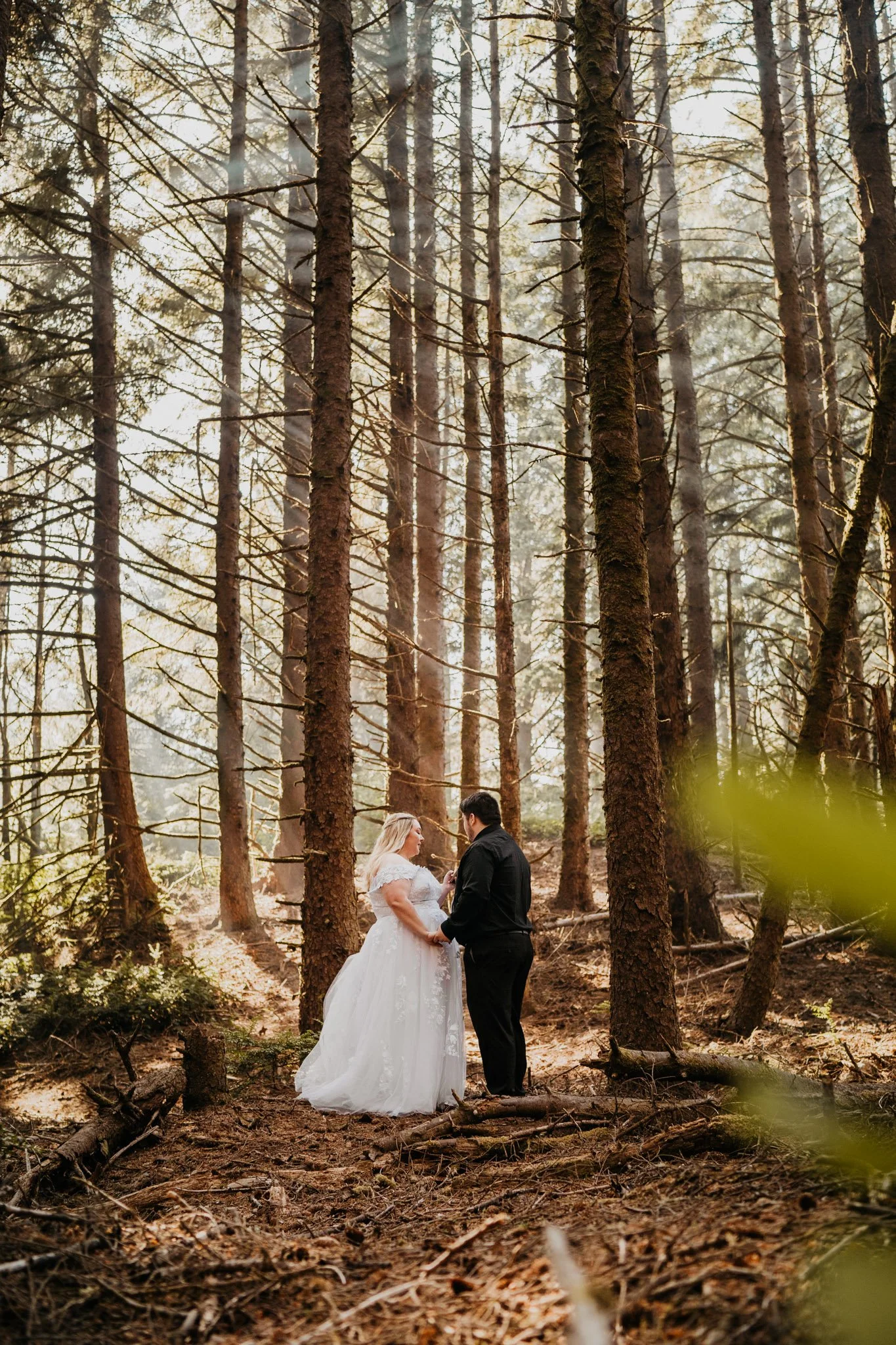
That same smoke which obstructed the beach views provided a really neat atmosphere as we explored the forest along the Oregon coast.
High visibility and great conditions are not guaranteed, especially during fire season—but in my opinion, not totally necessary for having an incredible elopement experience and great photos. Nature isn’t a backdrop you can control, rather something you get to immerse yourself in.
Here in Washington, I’ve seen snow at high elevations in August. I’ve seen fog in July, hail in October, and sunny blue-sky days in March. I’ve been on top of mountains in 40 degree weather with 40 mile-an-hour gusts. I’ve made beautiful images and had great experiences during all of them.
Like the famous saying: “There’s no such thing as bad weather, just the wrong gear.”
Hire an Experienced Elopement Photographer
This might be one of the most important pieces of advice I can give. A great adventure elopement photographer is also an information resource and support system for the logistics of your day, including wildfire contingencies.
As a photographer myself, here are my best tips on what to look for as you’re researching photographers for your elopement.
1. Look for someone local. There are tons of photographers out there who will travel anywhere for elopements or photoshoots. But how well do they actually know these destinations? Instead I highly encourage you to look for someone who lives in the area you want to elope in. Why?
They will know the area way more thoroughly, which matters a lot if things have to shift. They’ll know how and where to pivot. (My personal Washington “location catalog” that serves as my own notes resources is over 400 pages!)
They’ll likely be able to accommodate reschedules much easier if there’s no feasible backup plans.
2. Ask them to show you photos or galleries from weird-weather days. Photos in the rain or fog, poor visibility days or smoky ones. Ask them about days where they’ve had to pivot or change plans, and how that turned out.
3. Ask them about backup plans. Ask how contingency planning works: What happens if it rains? If there’s a wildfire? If the road closes? How will we communicate day-of if needed? What if there’s no good solution and we have to reschedule? Make sure their plans are airtight, and yours will be too.
Don’t Start the Next Fire
Along with avoiding and planning around fire, I have to take this moment to talk about another key part of fire planning: fire prevention and safety.
You don’t want your magic moment becoming a news headline or the country’s next megafire. No photo is worth someone’s life.
A few practical day-of tips
How to ensure you are being fire-safe on your elopement day:
Research and respect any and all fire bans. (This might include a firepit at your Airbnb.)
Limit campfires to designated, existing fire pits only. (No campfires during fire bans.)
No open candles in public lands or forested outdoor areas. (I only recommend flame candles if you are indoors AND your accommodations/venue permit them.)
NO fireworks, ever. Period. (Fire ban or not.)
Avoid smoking in public lands. (If you must, please use a tray.)
Douse completely any fires you do create. (It should be cool enough to touch with your hand.)
Avoid parking in dry grass.
Fire-safe swaps you can make:
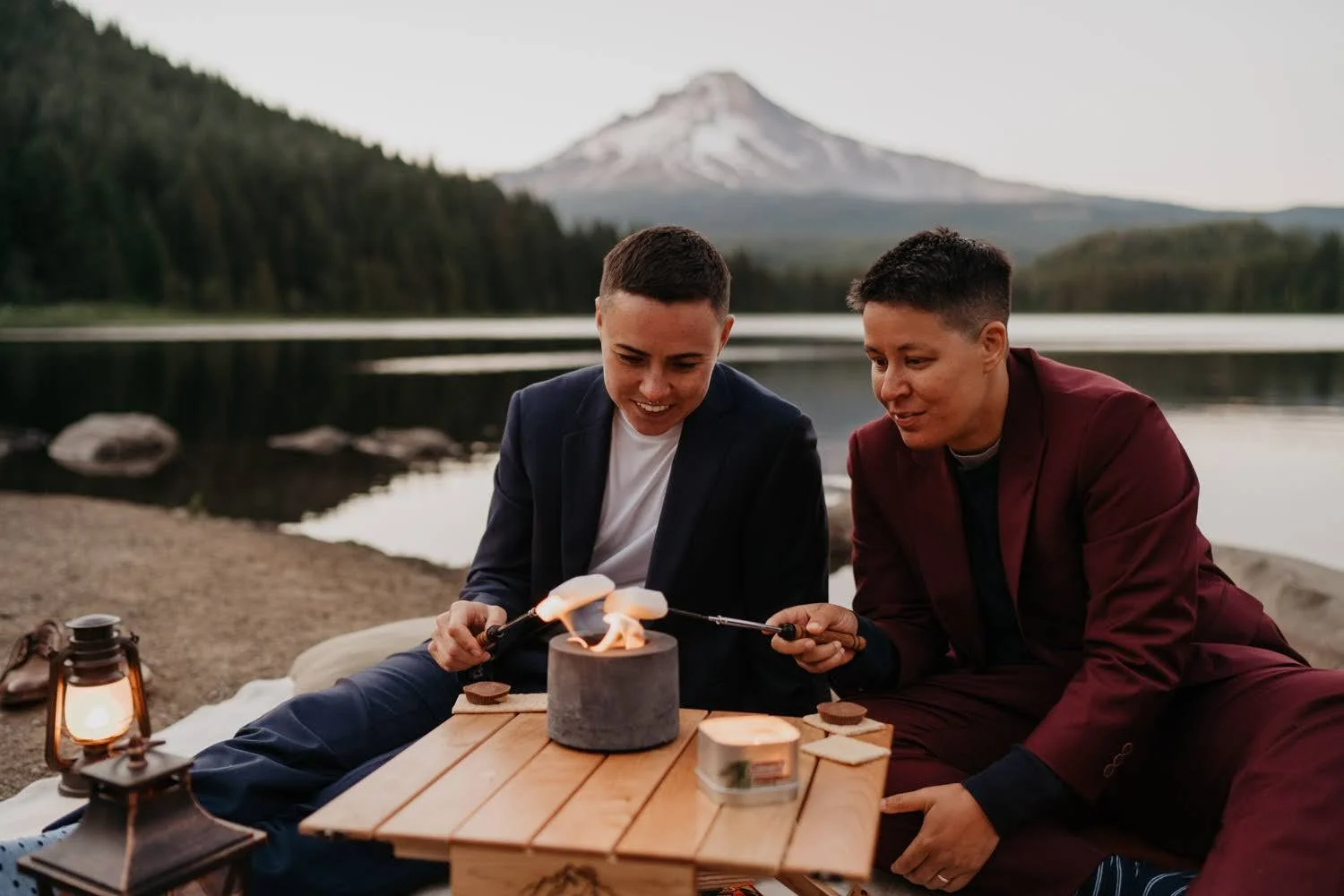
Opt for flameless/electric candles for your dinner table
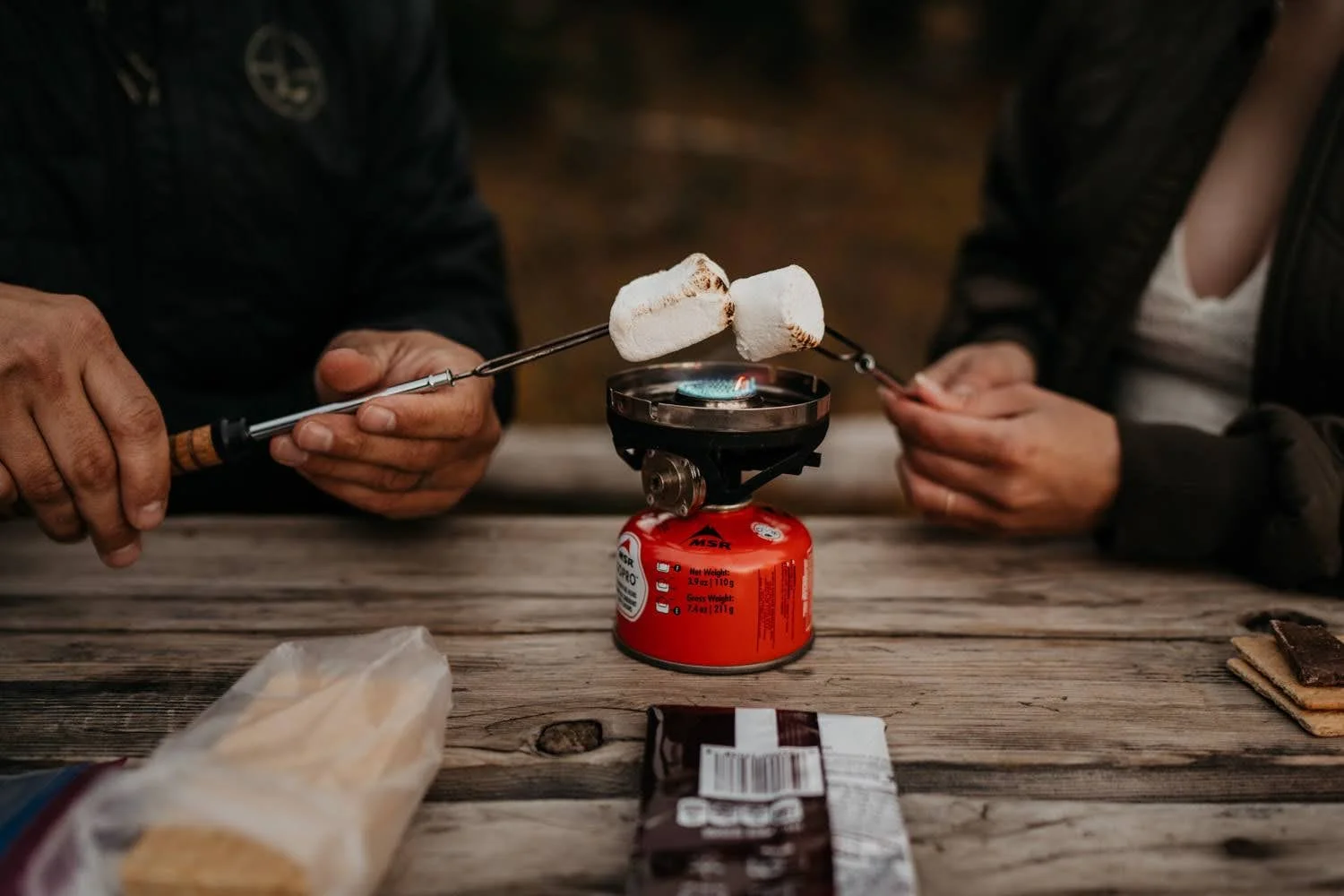
Craving s’mores? → Grab a backpacking stove like a JetBoil or MSR. Usually permitted during fire bans. Easier and quicker than a campfire, fits in in a backpack—plus great for cooking/boiling water for hot bevs.
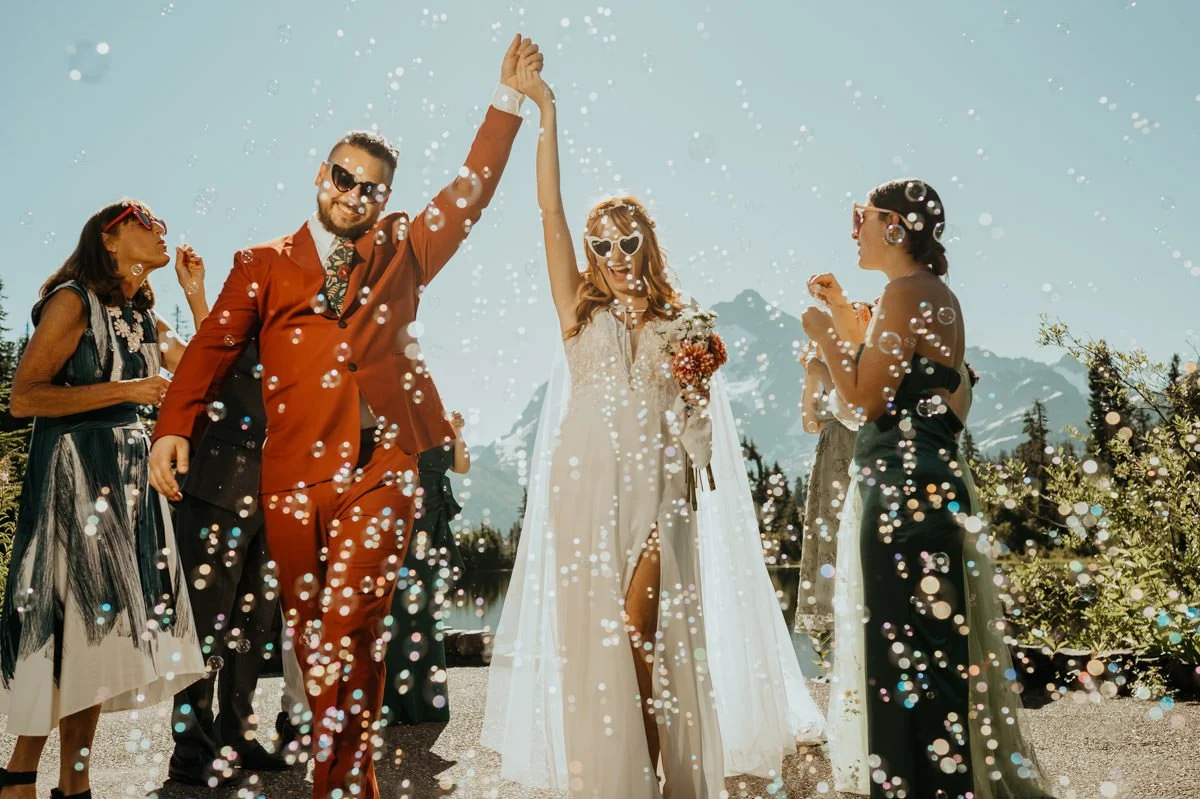
Instead of a sparkler shot or fireworks → Consider (nontoxic) bubbles. Glowsticks are also fun at night. (Skip the petals, confetti, or other materials in public lands.)
Love a campfire photo? → Consider alternate forms of lighting. Headlamps, car headlights, glowsticks, or your photographer might have some fun lighting tools to create some twilight or night photo magic, or do some light painting.
Don’t Let Fear Lead the Planning
I’ll be honest with you—fire terrifies me. Wildfire can be devastating. And it can happen any time. And as someone with anxiety—I get it.
But I do hope this article doesn’t scare you away from planning an adventure elopement in these fire-prone regions, simply because of the risk. The solution isn’t to avoid it or fear it—it’s to know what’s possible, plan ahead, and stay flexible.
That’s why we adventure. Because we don’t know exactly what it will be like.
I tell my couples: I make lots of plans so you two can have spontaneity that day. It seems a little counter-intuitive, but the more detailed the plans (and backup plans), the more wiggle room you’ll have day-of. The more kinds of scenarios you can envision and plan out beforehand, the more opportunities you’ll have at your disposal.
Also rest assured, if you’re eloping with us, I’ll be leading the charge with the planning. And that includes contingency planning. You don’t need to be the wildfire expert or the regional aficionado—that’s my job.
Don’t feel like you need to take elaborate notes here or have this memorized. I shared all this info so anyone out there can adventure responsibly and safely, and that no matter the conditions, you can find ways to have a great experience. Because ultimately, that’s what it comes down to—the experience of you two out in the wild, celebrating your love.
Support Impacted Communities
How to Help
Non-profits you can support with a donation:
American Red Cross — disaster relief and shelters
World Central Kitchen – feeds displaced families & first responders
Northwest Immigrant Rights Project (NWIRP) – wildfire displacement can disproportionately impact undocumented communities
Local volunteer fire departments
Wildfire Readiness Resources
If You Spot a Wildfire
How to Report a Forest Fire (In the U.S.) — Call 911
Many wildfires are first reported by hikers and visitors. (I reported one last summer!) Quick reporting can prevent major spread. Here’s what to do:
If you see a fire, call 911. Provide:
Exact location (trail name, mile marker, GPS if possible)
Size estimate
Wind conditions
Do not attempt to suppress it yourself.
Leave the area safely.
Wildfire Readiness Tips
Whether you live in a fire-prone region, or you’re traveling in one, it’s good to be ready in case a wildfire starts in your area.
Check active fire maps before heading out. (Watch Duty app is perfect for this.)
Keep track of the AQI, especially as you are hiking/adventuring. (IQAir is a great app for this.)
Know your exit routes.
Keep your gas tank above half in remote areas.
Avoid parking in dry grass.
Respect burn bans.
Don’t use sparklers or open flame in dry conditions.
Keep a small emergency kit in your vehicle.
More Resources:
Webcams & Conditions
Washington Wildfire Map – map of active wildfires in WA
InciWeb USA — map of active wildfires in USA
WA Burn Restrictions (WA DNR) — info on burn bans, active fires, preparedness
Washington Smoke Blog (University of Washington) — excellent science-based smoke forecasting
Wildfire Watch (WA DNR) — view cams to see general sky/air conditions
WSDOT Webcams – real time road webcams across Washington state
IQAir — real-time AQI monitoring and maps
Wildfire Safety & General Resources
Washington State Department of Natural Resources (DNR) — info on burn bans, active fires, preparedness
National Interagency Fire Center (NIFC) — national fire outlooks & statistics
Wildfire Safety (American Red Cross) — more info on wildfire readiness including safety checklists, what to do, how to stay safe
Planning a Washington Elopement?
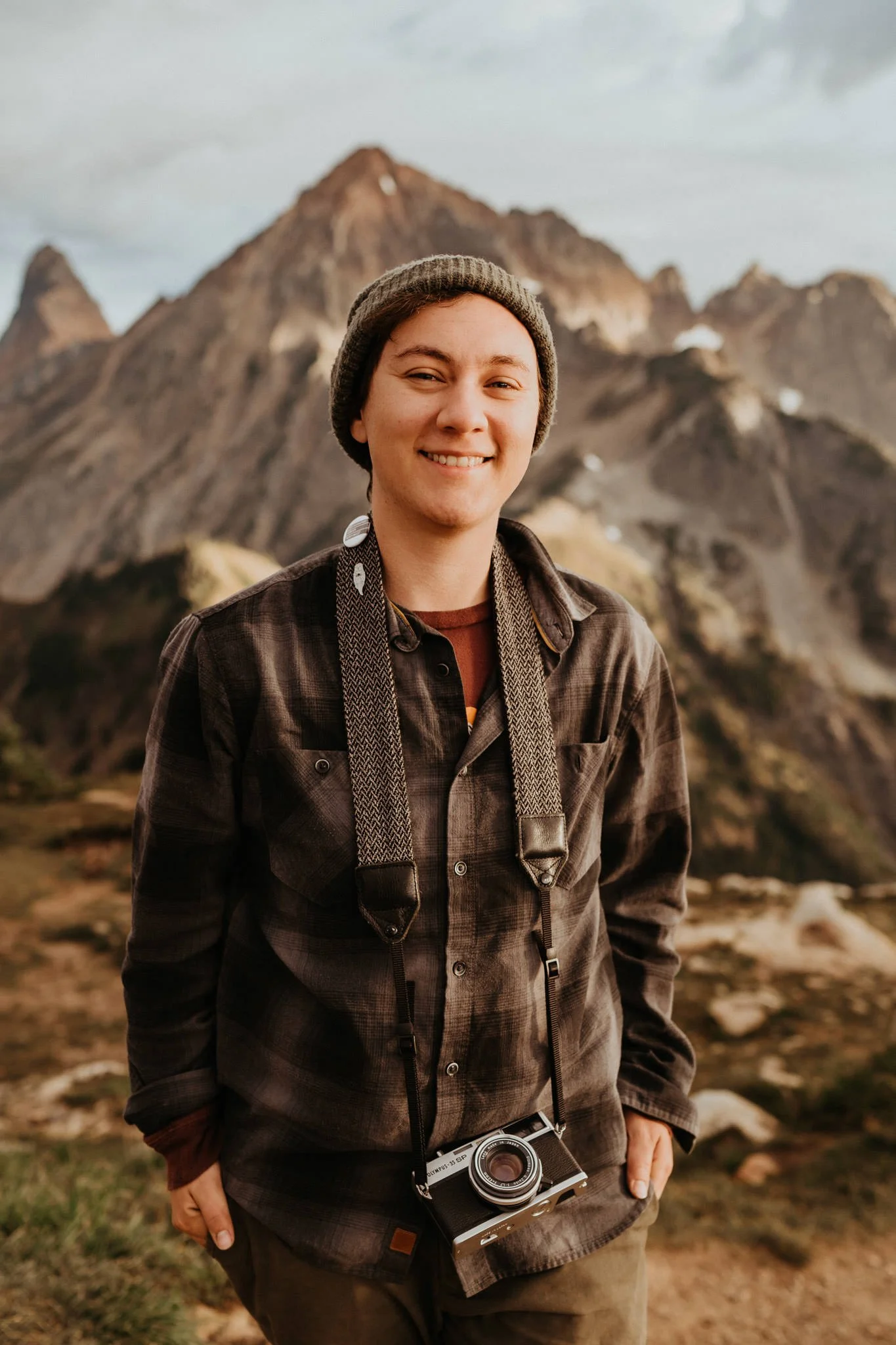
I’m Ashton, an adventure elopement photographer and guide who’s helped hundreds of couples plan incredible elopements across Washington state.
Think of me as your wilderness guide for all things elopement — I’ll handle the logistics so you two can focus on the experience.